
December 26, 2025 • 6 min read

Table of Content
Seniors with social anxiety have a challenge that is common but sometimes goes unreported. Many older people finally pull back because social situations become too much for them or make them uncomfortable, not because they want to be alone. Changes in routine, health problems, or less mobility can all affect confidence and make social interactions feel hard or stressful. Not wanting to communicate with others might get worse when you lose your social networks because you retire, move, or lose a loved one. Because of these changes, older people may stop going to events they used to like. Families and caregivers may help older people feel better about themselves and allow them time to get their confidence back by showing them that social anxiety is a normal response to change, not a sign of weakness.
For seniors, social anxiety often shows up as habitual behaviors instead of overt signs of fear. Seniors might not want to go to events, make fewer phone calls, or feel awkward in social situations that used to be fun for them. Some people can worry about being a burden, saying the wrong thing, or not keeping up with their friends. These feelings may slowly make people less likely to interact with each other over time.
There are different kinds of emotional and situational triggers. Changes in mobility, hearing, or health might make social interactions appear unexpected. People over 65 who aren't sure if they can move or hear well may find public areas uncomfortable. When people retire or move, they may lose established social anchors, which might make them feel more uncertain.
Seniors may feel weak or unsure about their place without help from people they know. These emotions do not signify weakness. They depict how people naturally feel when things change. With the help of kindness, understanding, and helpfulness, seniors can regain their comfort and confidence in social situations at their own pace.
The end of long-term relationships is one of the key things that makes older people anxious in social situations. When friends, spouses, or other known community members aren't around, social places can feel unfamiliar and emotionally draining. If you don't have any good pals, social events can be scary.
Reduced mobility or freedom also affects confidence. Seniors may be worried about staying fit, needing aid, or getting around in different circumstances easily. These anxieties could make you want to stay away from social events.
Another common problem is being afraid of being judged or embarrassed. Seniors may worry about forgetting things, not being able to hear well, or saying the wrong thing. These worries may get worse over time without you even realizing it.
Long periods of isolation may make anxiety worse. Not enough social engagement makes you feel bad about yourself and makes it hard to go back into social situations. With the correct help and encouragement, seniors can slowly get back to feeling comfortable and connected.
Seniors who have trouble with social situations may stop going to social events or limit their interactions, even with those they know well. Not accepting invites or not saying anything during conversations can show that you are uncomfortable rather than uninterested.
Another sign is feeling more irritable or emotionally distant. Seniors may seem angry, distant, or less involved at home. These changes are often not only mood swings; they are often signs of underlying stress.
It is also typical not to want to leave your home. Even brief trips can be frightening if you're not sure what to expect or you're anxious about being around other people. It may eventually reduce connection and separation.
If families detect these symptoms at an early stage, they can be patient and understanding. Seniors can feel more secure and comfortable communicating with others when they have gentle support and interaction on a regular basis.
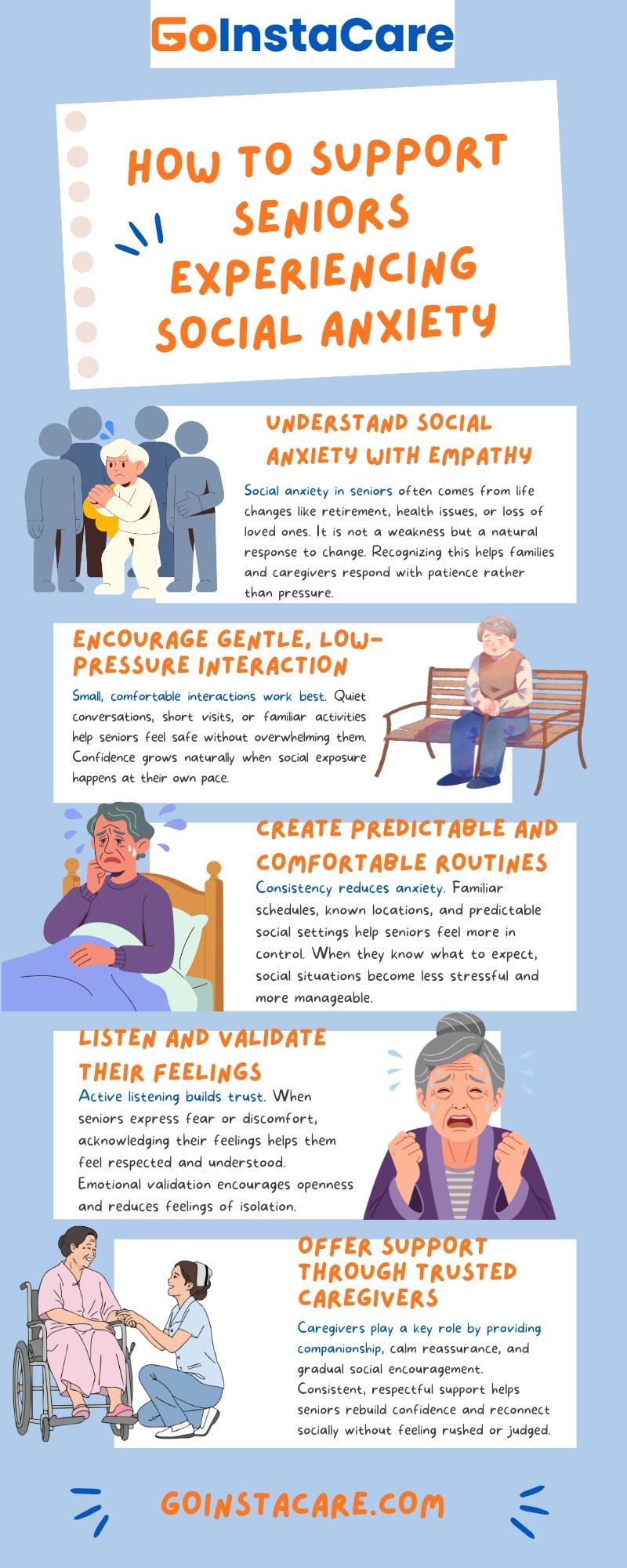
Families are very important when it comes to helping seniors with their feelings. Kind but not forceful encouragement is helpful. Seniors can join in on little invitations, quiet conversations, and activities that they are comfortable with.
Comfort and active listening are especially important. When seniors talk about their worries or hesitancy, being there for them and understanding them makes them feel acknowledged and valued. The basic purpose of reassurance should be to help people feel accepted, not to fix them.
Trust develops when people respect each other's limits. Making people engage with each other could make them more anxious but being patient allows their confidence to grow on its own. Families that respect the privacy of one another help everyone involved feel secure emotionally. Seniors who get treatment on a regular basis eventually feel safe enough to establish new relationships again because they know that their feelings are important.
Caregivers help seniors to get their social confidence back by spending time with them on a regular basis. Trust can grow spontaneously when two people spend time together in places they both know. These private conversations help seniors feel more comfortable being themselves.
Gradually exposing yourself to interactions with others helps build confidence at an appropriate level. Seniors can become comfortable being surrounded by other people.
Caregivers can respect each person's restrictions and encourage participation without compulsion. Seniors feel more confident when they are encouraged instead of pressured. Taking care of seniors on a regular basis makes it easier for them to reconnect with friends and families.
Trust and emotional comfort are the most essential qualities for kind caregiving at GoInstaCare. People who care for seniors with social anxiety recognize that they require kindness and respect. Caregivers make seniors feel valued by always being there for them and listening without criticizing them. GoInstaCare is mainly about caring for others in an approach that respects their boundaries and helps them connect at their own level. This plan helps seniors to feel safe and confident by developing meaningful interactions that boost their mental health.
Seniors might stay away from social events, limit their talks, feel uncomfortable in groups, pull away emotionally, or be hesitant to leave the house because they don't feel comfortable or confident.
Life changes including losing someone, having health problems, not being able to move around as easily, and being alone might make you less confident and make social situations feel unpredictable or hard to deal with emotionally.
Families can invite people without pressure, listen calmly, respect their comfort levels, and focus on activities they can all enjoy together instead of forcing people to join in or creating expectations.
Caregivers assist seniors in establishing trust and confidence by being calm companions, sticking to routines, slowly exposing them to social situations, and making sure they are safe.
If anxiety makes you feel alone, upset, unable to do daily tasks, or keeps you from doing things even when you get comfort and emotional support, you may need more treatment.
You need to be empathetic and caring to help people trust each other again. People of all ages who struggle with social anxiety need to know that their feelings are valid and that other people should understand them. Families and caregivers are essential because they make children feel protected without putting pressure on them. Seniors who feel better can reconnect with significant people in their lives and feel emotionally healthier with more respect.
Cities
Houston
Dallas
Austin
San Antonio
Miami
Chicago
Find Here