
December 13, 2025 • 6 min read

Table of Content
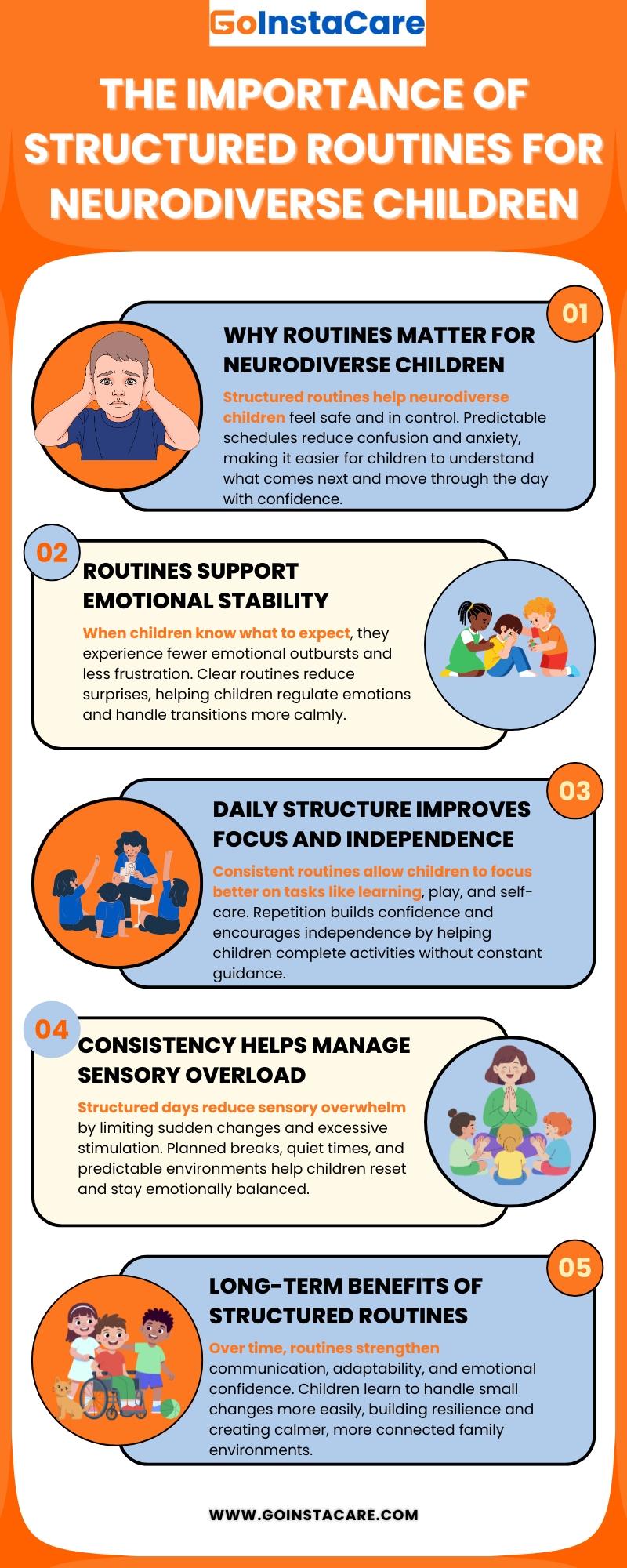
Structured routines are really good for neurodiverse kids because they make them feel safe, confident, and emotionally stable. Many kids with autism spectrum disorders, ADHD, sensory issues, and developmental delays feel less stressed and better able to understand their day when they have predictable routines. Routines help people get things done without being surprised or confused by providing them a sense of control.
When routines are not followed, kids may develop emotional problems including worry, frustration, or trouble switching between tasks. Unpredictability can change how they act, how they focus, and how well they can talk to others. These common problems often make youngsters feel overwhelmed, which makes it harder for them to manage themselves. A clear structure helps them feel safe, confident, and generally good about themselves.
Routines give neurodiverse youngsters a strong sense of stability since they naturally lessen anxiety. When kids know what to expect, their brains don't have to work as hard to deal with all the changes. This makes youngsters feel safer and less stressed, especially those who have trouble with their senses or with transitions. Because they know what to expect, they can handle everything that happens during the day with calmness and without worrying about surprises.
Children also do better when they know what they can expect. Constant planning and routines that repeat make it easier for them to transfer from one activity to another. Children are more prepared and activities go more smoothly when they know what to do next. This structure makes it easier for both the caregiver and the child to pay attention that makes everyday activities easier.
Children start to feel safe in their surroundings and know how to get around in them. They can learn how to perform things and finish their task on their own with practice.
Structure is really important for helping neurodiverse youngsters control their emotions because it cuts down on surprises. When the day has a set schedule, kids are less worried about sudden changes and more ready for what comes next. Because of this sense of preparation, they can keep their cool and prevent emotional outbursts when doing everyday things.
Another good thing about having regular routines is that they make it easier to move from one thing to the next. Many neurodiverse youngsters have a hard time moving from one activity to another, especially if it feels like the change is rapid. It's simpler to deal with changes when there is a clear schedule, calm cues, and steps that are always the same. When kids know what is ending and what is starting, their emotions stay consistent and they are less likely to fight back.
Structure also helps children not to feel stressed out by providing them less information to deal with at once. You can keep from getting confused and overloaded with sensory information by organizing the day up into simple sections and sticking to a consistent schedule. Children are better at taking part and maintaining their focus without getting frustrated.
Daily routines give neurodiverse youngsters a good foundation for success and safety. If kids have morning routines that include the same things every day, such as waking up, getting dressed, and eating breakfast, they can start the day with more confidence and peace of mind. This early structure sets the mood and makes people feel less anxious about rushing or not knowing what to do.
A clear structure for learning and play can also help with focus and emotional stability. Kids are more likely to get involved and have fewer behavior problems when they know when it's time to study, explore, or take a break. Bedtime routines add another level of predictability that is helpful. Kids can calm down and get ready for bed by doing things that make them feel good, including brushing their teeth, reading, or turning down the lights.
Children can take breaks during the day by doing things that are calm, such as sensory breaks, quiet spaces, or listening to relaxing music. These routines help them feel better emotionally and socially by reducing stress and helping them learn how to control themselves better.
Neurodiverse children need caregivers because they help them stay attached to regular routines that are beneficial and established. Repetition makes the child feel more secure that helps them understand what is required for them and allows them to achieve things.
Caregivers are additionally monitoring to see which strategies work best for each child. Talking to parents on a regular basis helps to keep routines at home and in childcare facilities the same. When parents and caregivers talk to one other about changes and children have less stress. This interaction enables children with different kinds of brains to stay emotionally secure and do well in all situations.
Structured routines help kids communicate better over time by making their days more predictable and safe. Kids can better say what they want when they know what's going to happen next because it feels more constant. Because of this, they find it easier to show how they feel, talk to others, or signal. When routines become second nature, kids are more open to small changes.
They learn that it is easier to deal with changes in activities when they occur often. This gives people more confidence and makes them less scared to try something new. These routines help children to learn how to deal with their feelings because their daily lives are not rushed. Families also find a way to keep everyone on the same track.
GoInstaCare says that kids do better when their parents understand how important it is to have a routine. Many families rely on caregivers for help and stability, and regular routines help keep things stable. When caregivers are good at making routines, kids feel safe, in charge, and ready to learn. They provide an environment where kids can grow without feeling overwhelmed by carefully and slowly guiding them through mornings, transitions, meals, play, and naps. GoInstaCare emphasizes these skills because they make a big difference at home. When families and caregivers work together, kids have calmer days, better communication, and more emotional confidence over time.
Routines make things more predictable, which lowers stress and sensory overload. Kids feel safe and more confident to handle their feelings all day long when they know what's coming next.
Children feel more grounded when they have regular morning steps, structured learning time, meals, calm-time pauses, and bedtime routines. These habits make it easier to switch from one thing to another and lower stress during busy times.
Caregivers do the same things every day, watch what helps the child, change things if they need to, and talk to the parents. This shared structure makes people feel safer emotionally and promotes trust between home and care settings.
Routines help things go more smoothly by getting rid of uncertainty, making expectations explicit, and helping things go more smoothly. Children feel more in control when things happen predictably. This reduces their anxiety and keeps them from getting too much sensory input during tough or fast-paced times.
You will see that they are calm and that they are more independent. The youngster gains confidence and the ability to handle daily tasks with less stress.
A schedule is an effective way for neurodiverse children to feel better emotionally and in their daily lives. Children feel more secure when the day has a clear schedule. Every shift goes more easily when things are the same. This helps them to know what is expected of them and makes them less stressed. Families also feel happier because schedules make things easier and make daily activities less stressful. Children have more chances to develop that they feel they can't handle when they have the correct basis. A regular routine becomes more than just a schedule.
Cities
Houston
Dallas
Austin
San Antonio
Miami
Chicago
Find Here
Companies