
December 31, 2025 • 6 min read

Table of Content
A pet needs a routine to feel comfortable and secure. They learn to expect their regular routines of eating, walking, playing, and resting. Pets stay calm and emotionally stable when life is predictable.
Sudden changes could make this feeling of safety go away. Changes in family routines, travel, moving, or a new schedule can make pets feel confused and uncomfortable. Pets may not understand how their surroundings have changed, but they are deeply affected emotionally. Changes to your routine can make you anxious, restless, or change how you act. If pet owners know how routine helps them feel better emotionally, they may be patient and sure of themselves when things change.
Routine gives pets a sense of security, which makes them feel emotionally safe. When pets know what's going to happen next, they feel more comfortable and in charge of their environment. Regular feeding times, playtime, and walks all help lessen anxiety and worry.
When things are predictable, pets can better understand their role in the household. Routines make people feel safe and like they belong. Pets know when to be active, when to rest, and when to find comfort. This structure helps people feel better and less worried.
Also, having a routine makes pets feel safe in their daily lives. Pets learn to trust their surroundings and the people who care for them through regular routines. Even small things like how you say hello or how you go to bed can be comforting.
Pets are less prone to getting stressed out by change when their routines are the same. They get more confident by doing things over and over. Pet owners who understand the importance of regularity are better equipped to understand how even small changes can affect their emotional well-being. Routine helps pets stay calm, mentally stable, and sure of themselves whenever possible.
Pets might get anxious when their routines are altered without warning. Changes in the owner's schedule are one of the most common causes. Pets may feel confused and uneasy when their owners work long hours, change shifts, or are gone a lot.
Moving or travelling makes you feel better emotionally. When you go to a new place or stay somewhere strange, your typical sights, scents, and routines are thrown off. Pets may have a hard time adjusting if they are not in their usual environment.
Getting a new pet or family member could make you feel stressed. Changes in how you interact with your pets, how much attention you give them, and how much space you give them can make them feel confused or ignored. Even good changes can be too much at first.
Changes in feeding or walking routines can make people more anxious. Pets feel safe and secure when they have certain routines. When their schedules change suddenly, pets may become restless, vocalize, or change their behaviour.
Changes in attitude and behavior that are easy to see are a common symptom of routine-based stress. Pets may have problems calming down when they are in a new place.
If your dog is barking more than normal, it might suggest that something is not right. Pets may make noise to signal that they ask for comfort when their habits change suddenly. People typically act worse when they feel comfortable.
Some pets flee away and don't want to be handled while others get too attached.
You should pay particular attention to any adjustments to how you sleep or eat. Anxiety might make you sleep too much or not want to eat all the time. Pet owners can make helpful changes to their routines and comfort their pets if they spot these signs immediately.
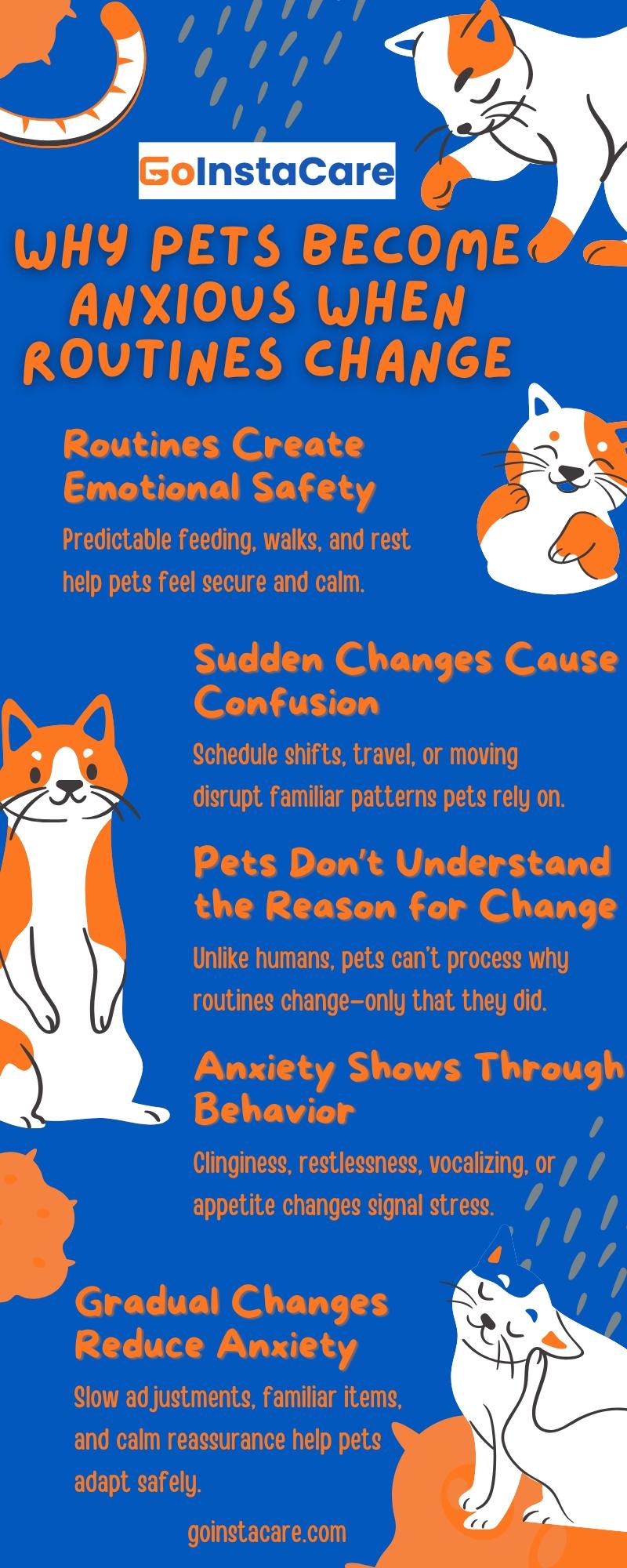
Pets deal with change in a very different way than people do. They don't understand why individuals change their plans, trips, or way of life. Without context, sudden changes can be upsetting and confusing.
Pets use things they already know to find out what's happening around them. The people and everyday activities around them make them feel secure. Pets may not understand when these signs change.
They need things to be the same all the time to feel safe. When things are not predictable even small adjustments might feel significant. People who own pets can be more understanding and kind if they recognize this difference. Pets can handle change better and feel less stressed if their routines are stable and comfortable.
When changes are implemented slowly, pets can adapt without getting too stressed. When changes are introduced slowly, pets can handle them better. Pets get used to things better and have less emotional trauma when changes are made slowly and in little steps.
It's just as important to maintain things that people can recognize. Having familiar bedding, toys, food dishes, or habits will help you feel better throughout changes. These familiar things help pets feel at home, even when their environment or routine changes.
Constant reassurance helps people stay emotionally stable. Your pets will feel comfortable with you around all the time, a kind touch, and a calm voice. Reassurance should stay constant and patient. Pets are more likely to stay calm, confident, and emotionally stable during changes when they happen slowly and are supported by things they already know.
Caregivers help pets get used to new routines by keeping things as structured as possible. Keeping up with regular feeding times, walks, and rest times helps pets become used to new situations. This structure makes pets feel safe and decreases their emotional confusion.
It's just as important to keep people company. Pets feel less alone when things change and they see a calm, familiar face. Spending time together and gentle interaction all help people feel better and less anxious.
You need to be aware of your feelings and take your time to keep them in review. Caregivers stay calm when they find signs of stress. Pets that have a calm voice and respond in ways. Pets are more secure when their caregivers are always there for them and are emotionally present. Pets are able to adjust to new routines and feel secure that makes the change easier for their minds and emotions.
When their care is calm and emotionally supportive, pets are better able to deal with change. GoInstaCare wants to help pets get adjusted to new schedules without changing their routines. Caregivers take the time to find out about each pet's daily routine and how they show their feelings.
GoInstaCare helps with anxiety during times of change by giving you a stable environment. Caregivers make people feel better by talking to them often. Pets can adjust to new routines and establish feelings because they feel safe through this regular strategy.
Pets need things to be the same so they can feel safe. Pets don't comprehend why things change suddenly, which makes them confused, apprehensive, and anxious because they don't know why things are different.
Changes in the owner's schedule, moving, traveling, getting new family members or pets, and sudden changes in feeding or walking times frequently make people feel the most strongly.
To help pets feel comfortable during transitions, owners can make changes slowly, stick to familiar routines, keep comfort objects close by, and offer calm reassurance.
Signs of emotional distress include pacing, vocalizing, clinginess, withdrawal, changes in appetite, sleep problems, restlessness, and unexpected changes in behavior.
Assistance is helpful when things change a lot or feelings of anxiety that does not get better with comfort and consistency.
Pets require regular schedules to feel safe and mentally healthy. Understanding can help you relax and feel better when things change. Pets can handle changes better if their routines remain stable.
When pet owners know how their pets feel, they can respond patiently instead of aggressively. When pets are treated well and have regular routines, they become emotionally stable and self-assured. This makes it easier for them to deal with change and feel comfortable.
Cities
Houston
Dallas
Austin
San Antonio
Miami
Chicago
Find Here