
December 26, 2025 • 7 min read
Table of Content
Families often have trouble deciding because the terms home health and home care appear similar but represent different things. Both options aid people at home, but the type of care, level of medical involvement, and daily support are very different. This confusion might make it hard to make judgments, especially if you are becoming older, getting better from an illness, or both. When families know the differences, they can choose the care that works best for them. Families can make smart decisions, avoid disappointment, and feel good about their choice if they know what each alternative has to offer. Clear information helps people make better choices, which ensures that loved ones get the right amount of care at the right time.
Home health care is primarily concerned with providing clinical or medical support at a patient's home. It is normally best to have professional care when someone has a medical problem, an accident, or is recovering from one. This form of care helps healthcare providers make treatment plans and keep an eye on their patients' health.
Home health care often depends on a person's health or is only needed for a short time. It can help you recover at home after surgery, being sick, or being in the hospital. The goal is to help people stabilize, regain strength, or safely handle certain medical demands outside of a hospital.
Home health care is more about watching and recovering than helping with routine tasks. It lets loved ones stay in familiar places while helping families make sure that their health requirements are met. This form of care is scheduled, has a set time limit, and is focused on getting results. Families can tell when they need medical help and when they would be better off with non-medical care if they know more about home health care.
Home care is more about having someone to talk to and helping with daily tasks than it is about getting medical aid. Its goal is to help people complete their everyday duties while still being able to live independently and comfortably in their own homes. Home care is often long-term and evolves as needs change.
This form of care helps with everyday tasks including cooking, getting about, personal care, and cleaning without using medicine. The goal is to keep things familiar and respectful while making everyday life safer and easier. Home care also helps with emotional health by offering constant company and presence.
Two important parts of home care are help with practical things and help with emotional things. Caregivers help people feel more confident about their daily duties, encourage routine, and make them feel less alone. This help will be particularly useful for seniors, persons with disabilities, and others who need help but don't need medical care.
Families often choose home care when a loved one needs ongoing aid with comfort, routines, and emotional support. It lets patients get regular, personalized care that works with their daily life while they stay at home.
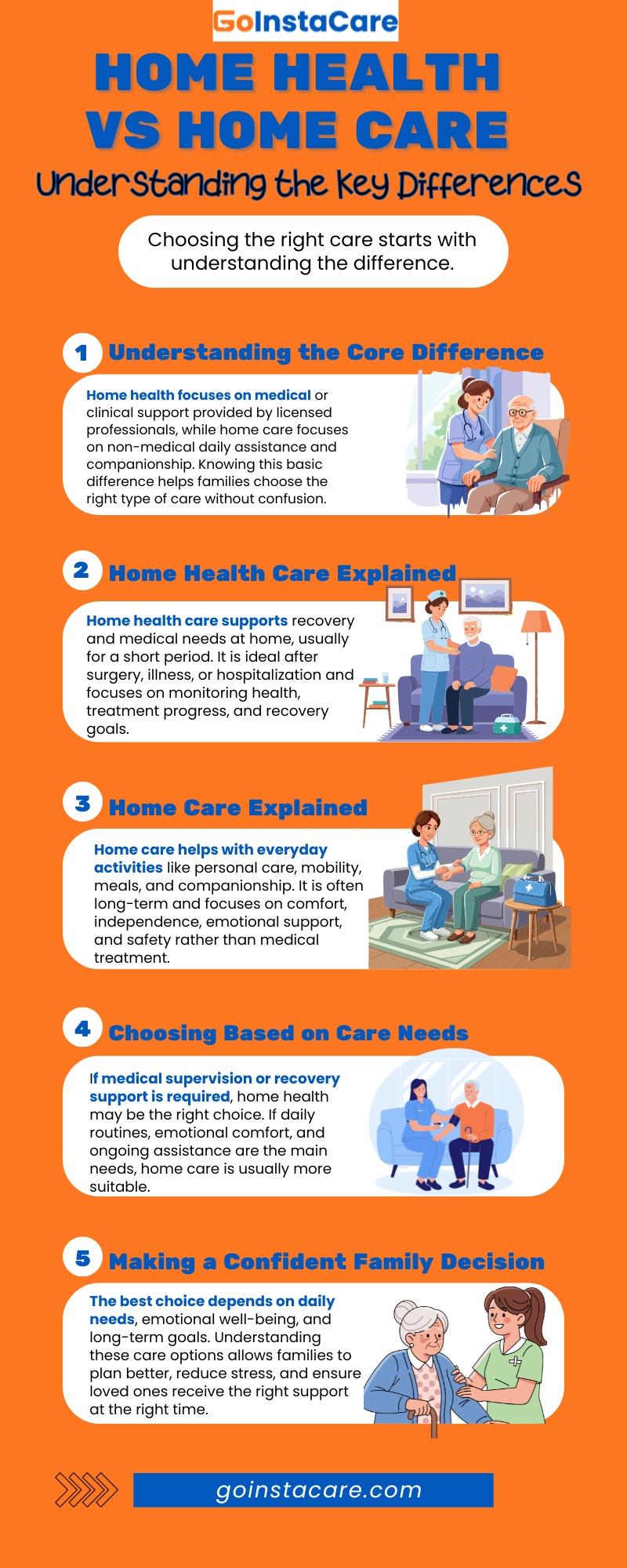
The services that home health and home care provide are what set them apart. Home care is more about helping with daily tasks and giving emotional support, whereas home health is more about medical or condition-related support.
The length of care also changes. People usually only need home health care for a short time, as when they are recovering from an illness or injury. Home care can be ongoing because daily needs change over time.
There are also disparities in how much support and monitoring there is. Home care is for daily help, company, and safety in everyday life. Home health is about having an expert watch over health monitoring.
Families can choose the best care for their loved one's current situation by knowing about these differences. This ideal choice will depend on comfort and everyday healthcare.
When recuperation help is required at home following a hospital stay or medical operation, home health might be the best option. It focuses on stability and healing while assisting people in making a healthy transition.
Families may also choose home health for temporary medical monitoring. Home health offers structured help without long-term commitment when a condition requires observation or short-term direction.
The focus of home health care is on immediate needs. Services usually stop when health issues stabilize or recovery advances.
Home health provides comfort during a certain time for families having to make medical recovery decisions, guaranteeing that care requirements are met while letting loved ones stay in familiar settings.
Home care might be a better choice if someone needs help every day at home. It helps those who need help with their routines, getting around, or having someone to talk to instead of focusing on recuperation.
This is the greatest solution for seniors who require help with everyday duties, emotional support, and someone to be there all the time. Home care helps with comfort, independence, and regular stability. Families often select home care when emotional support and quality of life are more important than physical help. It provides steady, adaptable care that grows over time to meet changing needs.
The first step in deciding between home health and home care is to figure out what you need every day. Families should think about whether they need help with routines and comfort or with getting better. It is easier to understand this when you think about the problems that come up every day.
Emotional comfort and safety are both very important. Some people need more than just clinical supervision to feel safe, supported, and stable. Some people may need to be watched closely for a short time.
You should also think about how things will stay the same and how they can change. Home health follows set care plans, but home care is more flexible and can change to suit new needs.
Families benefit from careful observation and open conversations. To choose the best option, you need to make sure that care is based on real needs and not labels. When families know exactly what their alternatives are, they can move forward with confidence and clarity.
Families at GoInstaCare benefit when care alternatives are straightforward and not scary. By knowing the difference between home health and home care, families may choose the service that works best for them. Clarity keeps expectations in line and lowers emotional stress.
GoInstaCare helps families make better choices by helping them focus on their daily comfort, safety, and mental health. Families can plan and adapt support with more confidence when they know what care options are available to them. When families feel informed and encouraged, they are more deliberate and less reactive when they care for someone.
GoInstaCare helps families by creating a supportive care environment and thoughtful decision-making. A clear understanding leads to better experiences and peace of mind along the caring journey.
Home health care helps people get better quickly, whereas home care helps people every day, gives them company, and helps them with their daily needs for long-term comfort and stability.
Yes, home care is meant to help people for a long time and can change to meet their changing needs for everyday life, emotions, and lifestyle.
Families can choose home health care following hospital release, during recovery phases, or when temporary condition-specific assistance is required at home.
Yes, home care helps with everyday tasks, gives emotional support, companionship, and comfort, and makes people feel safe and cared for at home.
To choose the best care option, families should think about their daily requirements, emotional comfort, safety concerns, and long-term goals.
The first step in choosing the best service is to know the difference between home health and home care. Each choice has a different purpose and supports families in different ways. Making clear decisions reduces stress and ensures that loved ones get the care they require. Understanding gives you peace of mind, if you need help with your recovery. Making the right decisions about care helps with emotional stability and physical health.
Cities
Houston
Dallas
Austin
San Antonio
Miami
Chicago
Find Here