
December 31, 2025 • 7 min read

Table of Content
Guilt is one of the strongest emotions that may affect how you care for someone. When the needs of care evolve, parents and adult children can feel silently obligated, worried, and unsure of themselves. Guilt might stop you from doing anything or make you feel emotionally heavy about all your alternatives, even when you know you need help.
A lot of families don't talk about these feelings. Adult children may feel torn between their own responsibilities and the needs of caring for their parents, while parents may feel awful about requiring help. These sentiments have a big effect on choices, even if people don't usually say them out loud. When families understand how guilt works, they may make decisions about care with empathy, clarity, and emotional honesty instead of blame or pressure.
The notion that needing help signifies failure often serves as the initial catalyst for guilt associated with caregiving. Adult children may believe they ought to handle matters independently, but parents may feel they should maintain their autonomy. You may be letting someone down if you ask for help as your needs for care expand.
Family and cultural customs can affect the growth of guilt. Many families have strong beliefs about being responsible and caring for senior individuals at home. If you have too many expectations on you, these beliefs may make it hard to approach others for assistance.
Internal pressure to do everything adds another dimension. Adult children set goals for themselves while trying to balance work and caring for others. Parents might not want to be a burden to other people. This subtle tension makes people emotionally tired. When families know where shame comes from, they may see it as a natural emotional response instead of a sign of personal failure. This helps them make kinder, fairer judgments about care.
When parents are seeking someone to watch their kids, guilt may have a big effect. People often worry about being judged. Parents may worry that people may think they are inept or distracted even while they are trying their best. This fear often stops people from speaking out about their worries.
The emotional effect on the child is another big worry. Parents may be concerned that their child may become confused or experience mental distress if they begin utilizing external care. These fears may make it harder to make decisions, even when help may make daily life easier.
People often don't want to get help from others after this. Parents feel that they have to do everything on their own because they assume that asking for help means giving up their duties. This guilt might lead to burnout. Parents may better understand how seeking help may increase rather than weaken care by recognizing these emotions.
Adult children often have to deal with competing responsibilities. Juggling their own families, jobs, and care responsibilities may put a lot of stress on them all the time. Guilt is worse when people think they're not doing enough at work.
Fear of letting parents down makes emotional weight heavier. Children of adults may worry that asking for help from someone else may make their parents feel like they are not wanted or needed. This fear may also make people put off making decisions regarding care, even when safety or health risks are clear.
Finding a balance between love, responsibility, and limits is hard on the heart. Adult children really want to help others, but they don't have the time, energy, or ability to do it. Guilt arises when these limits clash with emotional expectations. Adult children who understand this struggle may make better decisions about care with compassion, honesty, and healthier boundaries.
One way that guilt shows up is by making people avoid things. Families may put off having awkward conversations since it is hard for them to accept that they need help. Not talking about these things could make you feel better for a short period, but doing so often makes you more stressed over time.
Another common sign is pushing yourself too hard emotionally or physically. Caregivers push themselves too far because they think they have to accomplish everything on their own. This could not lead to long-term care, but instead to exhaustion, anger, or health problems that get worse.
One of the clearest indicators is putting off getting help when you need it. Families put off getting help even when they know they need it because they feel bad about it. They may feel like they are in command of everything or be afraid of being criticized. By recognizing these tendencies, families may better comprehend when acts are driven by guilt rather than the optimal outcomes for all persons involved.
Guilt often makes people feel emotionally tired. When caregivers constantly put themselves down or hold up their needs, their emotional vitality slowly fades. This stress that keeps coming back is too much to manage.
As a result, feelings of resentment and tension may go up. Caregivers may feel torn between their personal limits and their duties. Unspoken irritation may build up and hurt relationships and mental health. These feelings are signs of being overwhelmed, not a lack of love.
Another effect is that the care quality gets worse. Small tasks look more difficult and feelings may become less secure. People who care because they feel guilty may forget about the environment. Families can better understand, improve care results and keeps family members and caregivers safe.
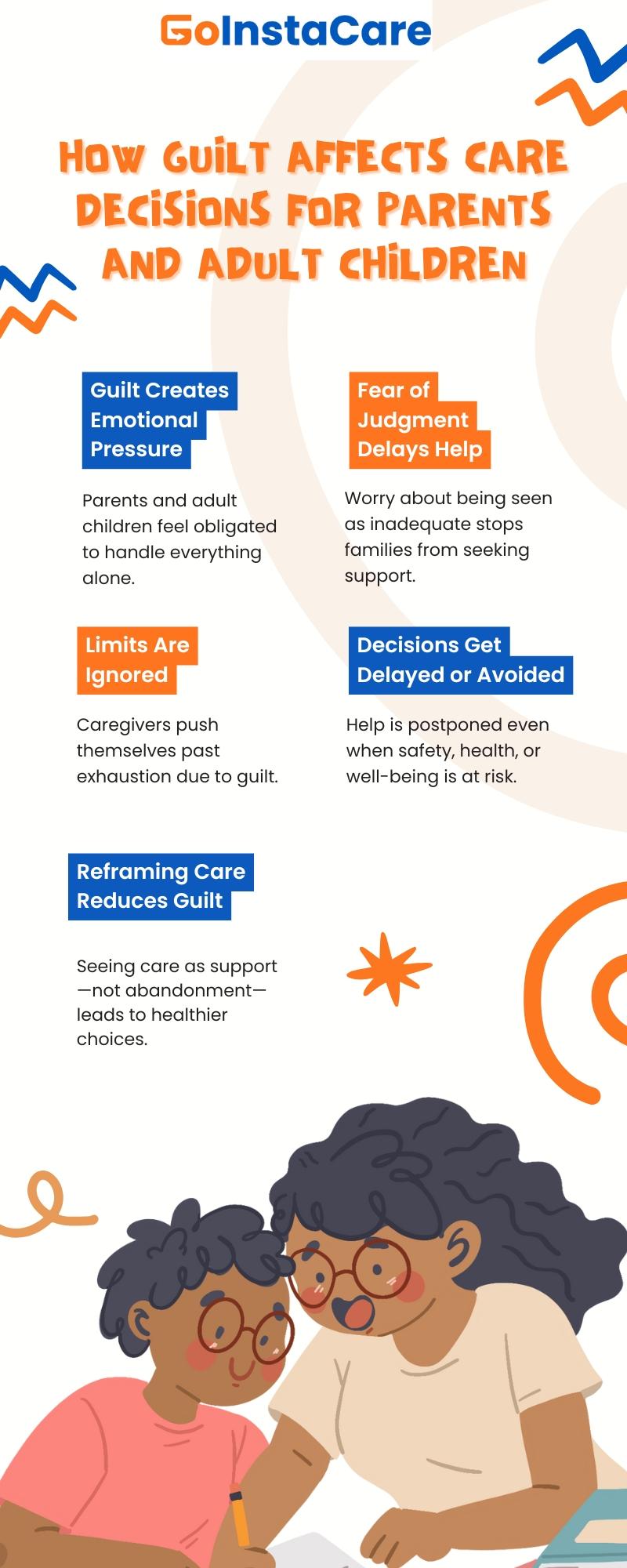
Caring for an individual does not mean giving away. When you ask for support, you need to respect your loved one's limits while keeping their safety and mental health as your main priorities. Choosing care shows that you care about an individual. Even if one person can't do everything, it shows that they want to provide trust and respect.
When family members and trusted professionals share care, it is easier on feelings. Support helps parents and adult children get back to essential responsibilities rather than continually managing emergencies.
Guilt may be eliminated by reframing caring. Love is protected by support, not replaced by it. Families may concentrate on emotional intimacy, presence, and trust when the proper support is in place. Instead of being a step away from responsibility, care becomes a bridge to balance.
GoInstaCare sees guilt as a normal sensation, not an indication that you failed. The basic aims of compassionate caring are to give families and loved ones peace of mind, openness, and emotional safety. GoInstaCare helps families understand that caring for someone is an extension of love, not a replacement for it, by always being available and being kind. When caring feels more like working together than fixing things, guilt slowly goes away. Families come to think that their choice protects their habits, dignity, and mental health. GoInstaCare caregivers help parents and adult children stop blaming themselves by meeting their basic needs and providing emotional support. This plan may help families heal, get back together, and move on with confidence instead of regret.
Parents typically connect caregiving to their sense of self and love, so asking for help might seem like letting their kid down, even if it makes them safer, helps them grow, and makes them feel better.
Guilt makes adult children feel split between their duties, which leads to persistent self-doubt, emotional stress, and trouble setting boundaries, even when such boundaries are good for their parents' health and dignity.
Yes, guilt makes people want to avoid things and think about hope, which makes families wait to get help until stress gets worse, needs get more urgent, and choices become fewer during emotional crises.
Families deal with guilt by changing how they think about care, making it a partnership, sharing responsibilities, asking for help, and putting the safety, dignity, and long-term mental health of the people they care about first.
Knowing your limits and asking for support demonstrates that you care about other individuals. This protects connections and ensures families and children get the same kind of care.
Choosing to have help with care doesn't mean you've failed or lost love. It is a thoughtful response to real needs, changing abilities, and emotional limits. Families that let go of their guilt can have stronger relationships, more shared responsibility, and better care. Support helps adult children and parents come together with love instead of anger and tolerance instead of tiredness. Making honest and caring decisions about care protects everyone. Taking help demonstrates that you are brave, aware of yourself, and really care. It makes sure that people you care about feel secure, respected, and supported through all of life's changes.
Cities
Houston
Dallas
Austin
San Antonio
Miami
Chicago
Find Here