
October 16, 2025 • 5 min read
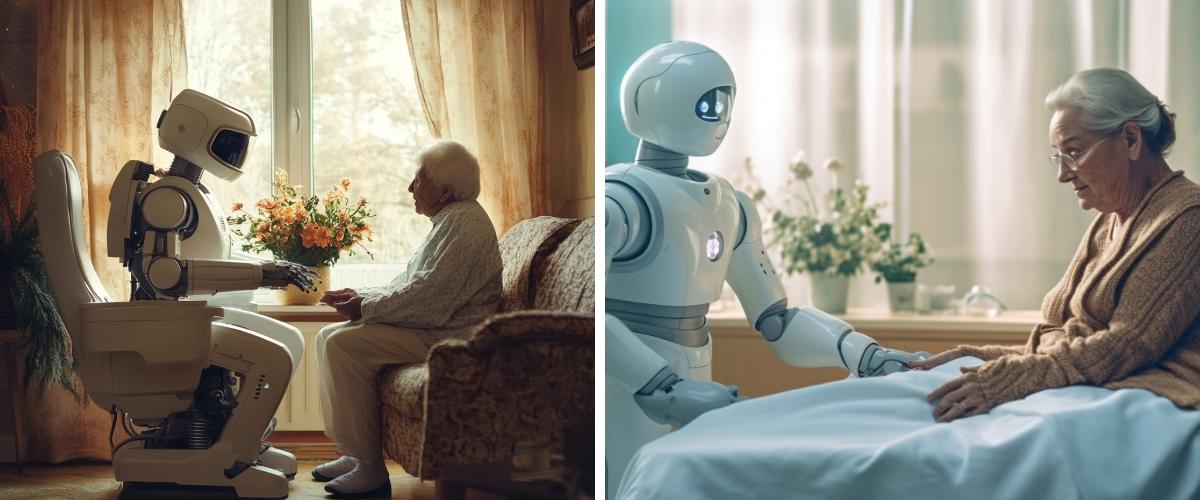
Table of Content
Technology is becoming a part of everything we do, especially when it comes to taking care of people. Two examples are smart speakers and robots that provide assistance. Families can't always get reliable support and there are not enough caregivers. AI and smart monitoring systems are all growing better and making a lot of exciting new developments.
They can help with daily tasks and remind you when to take your medicine. But relationships and caring for others are still essential to good care. By looking at the pros and cons of caregiving technologies we can see how robots might support human caregivers instead of taking their jobs. Let's see how new ideas can help us take better care of the people that stay with us.
The need for live-in caregiving is growing as the U.S. population gets older and there aren't enough qualified caregivers. Seniors often require help with daily duties, taking their medications, and emotional support all day, every day. This might not always be possible with regular in-home care. Families can look for reliable support because the cost of hiring a professional caregiver is expensive.
AI and smart monitoring systems can assist with daily tasks and mobility support. Technologies can't replace compassion for others but it can assist families to deal with not having enough employees and offer seniors more freedom if used effectively. Live-in caregivers are to make things easier and offer care with more secure and affordable care for the long term.
Families are approaching live-in care because of AI-powered caregivers. Some new technologies are AI-powered aids for mobility and smart monitoring devices that keep track of health measurements. Voice-activated senior assistants and AI fall warning systems are making it easier for seniors to stay safe. Assistance robots like Paro have shown in Japan how technology can help people in both practical and emotional ways. These technologies can help with daily tasks like reminding people to take their medicine.
Robots are good at being reliable and helping caregivers but they don't understand human feelings very well. People can be happy with technology but it can't fully replace kindness between people. Families should know that robots are not meant to replace people but to help care for individuals more effective. AI and live-in caregivers work together to help seniors in an effective manner.
There are many good things about robot-assisted care for seniors. They can help you without getting tired. Seniors can stay safe by monitoring their health and reminding them to take their medicines. These services are intended to support not to replace human caregivers.
Robots do repetitive tasks that allow people to focus on relationships and individual care. Continuous monitoring can make things more secure by allowing families to know if someone falls or has health problems. AI-powered devices can also keep track of things like heart rate and activity levels. This provides caregivers essential data that can assist them to make choices.
Technology ensures that seniors get reliable support and kind human care for families that don't have enough caregivers when you utilize innovation and compassion in the caregiving process.
Even while robotic caretakers are quite skilled, they have precise limits. Technology can't replace the human connection that many seniors value. When robots can't provide essential elements of care like shared experiences and emotional support is lost. This isn't something technology can do completely.
Another problem is trust and privacy. Families should think about how they share and protect their information because AI systems often collect private health data. To ensure that robotics is used safely and caregivers need to be very careful about digital safety. A lot of families can't buy modern robotics technology because it's so expensive. These new ideas can make care better but they can't take the place of people who provide comfort and meet emotional requirements.
When families use robot-assisted care, they need to think about their emotional and financial requirements. When technology and human caregivers work together seniors get regular assistance. Families can use technologies to get better results while continuing by caring.
Even if AI gets better, the human touch is still important for giving good care. Machines can't make people feel like they are sharing experiences or forming emotional bonds. Seniors benefits from comfort and the warmth of the human connection. This type of care offers you comfort and trust.
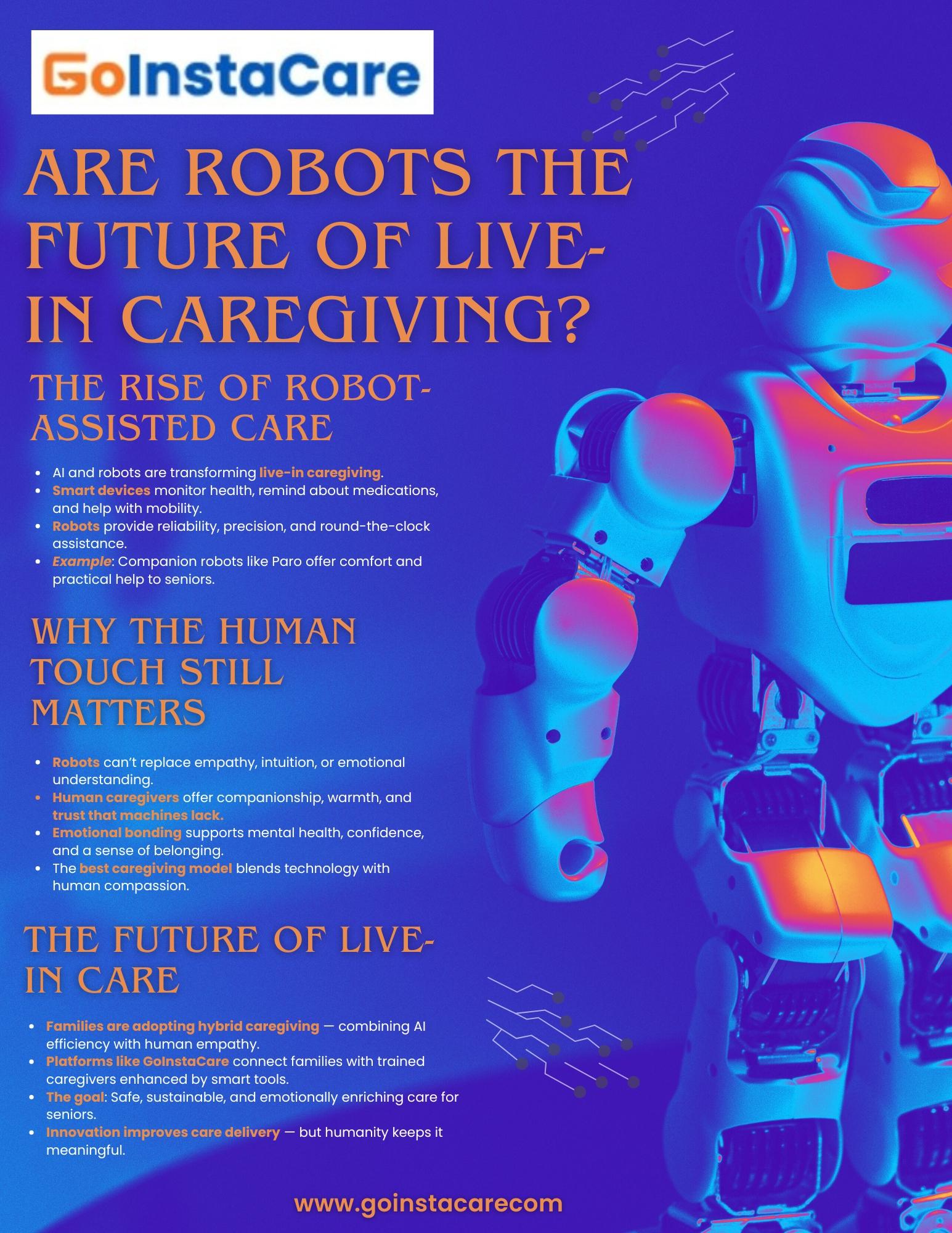
Robots are better as helpful companions than replacements for human caregivers even though they are useful for monitoring and reminding them to do things. Families increasingly choose for a combination strategy that integrates the successful use of technology with qualified caregivers. It keeps the relationships to make life better every day while ensuring that seniors receive reliable support.
GoInstaCare is a great example of how creativity and humanity can come together. Families can find live-in caregivers who satisfy their essential requirements and give them personalized care. Technology makes the process better but caring for someone is still a human job. Combining AI technologies with genuine care can help seniors to stay healthy.
Yes, caregiving with robots is already a reality today. They don't replace human caregivers. Instead they help with tasks like reminding people to take their medicine and keeping them entertained which makes things easier.
People who care for others can't be replaced by robots. They don't have emotional intelligence or the relationships that seniors value.
AI can help with daily tasks and provide reliable support. They help caregivers without taking away the emotional connections that people have with each other.
Families can connect with caregivers who have been verified through intelligent matching algorithms through GoInstaCare. Technology offers personalized care with human interaction.
AI might impact the way live-in caregivers work by making it more secure and easier. These changes make daily tasks easier and provide seniors with what they need that makes them happier. But technology can't replace the emotional connection and compassion.
Families are starting to realize that the most effective way to care for an individual is to use the newest caring technologies. GoInstaCare is a good example because it uses technology to securely connect families with caregivers. It is not about people vs robots in the future of care. It is about blending creativity with humanity.
Cities
Houston
Dallas
Austin
San Antonio
Miami
Chicago
Find Here