
December 18, 2025 • 7 min read

Table of Content
Emotional safety is the most important thing for helping kids with special needs feel accepted, comfortable, and ready to interact with the outside world. When a child feels safe, their body and mind relax, which helps them learn, talk to others, and try new things without fear. Since kids aren't stressed out or unsure of themselves, emotional safety is where they grow.
This level of help is also important for kids with special needs who may react more intensely to change, sensory stimuli, or strangers. When parents and other caregivers set up regular routines, talk to kids in a calm way, and always reassure them, kids feel safe and secure. When people feel safe emotionally, they can talk about their feelings more openly and feel more sure of themselves in everyday situations.
For children, emotional safety is always feeling like they are understood, welcomed, and supported. Kids with special needs, need to feel like they are being heard even more since their feelings can be hard to understand, strong, or hard to put into words. When a caregiver pays attention to cues, stops to listen, and responds compassionately, the child learns that their feelings are normal. This understanding helps create a calm emotional environment because the child doesn't have to hide or hold back their feelings.
Setting up routines that people can count on is also important for making people feel comfortable. When kids know what's going to happen next, their bodies relax and their stress levels go down. For youngsters who have problems with changes or sensory input, having constant patterns can help them feel less uncertain. When individuals grow used to the pattern, they feel more in control, which makes life easier and less stressful.
Having faith in the caregiver's methods is the last step in emotional safety. The child feels safer when the caregiver talks to them in a calm voice, gives them gentle instructions, and treats them with respect. The child eventually learns that this person won't rush them, ignore their needs, or make sudden changes. The child feels safe and confident to explore, interact, and grow when they know that someone is always there for them.
When a child's environment is calm, consistent, and responsive to their needs, their emotional stability improves. A calm setting helps children with special needs control their emotions because it cuts down on noise, distractions, and sudden sensory demands. When a child gets overwhelmed, they can reset in a safe area with familiar things, comfortable chairs, and soft lighting. They might feel more at ease and be more comfortable in this kind of atmosphere since it shows that their comfort is valued.
Sensory sensitivity is another crucial thing that affects emotional security. Many children with exceptional needs exhibit strong sensitivities to touch, sound, movement, or anything they can see. Once caregivers know about these sensitivities, they can change the environment to keep sensory overload from happening. This could mean giving the child breaks, minimizing background noise, or getting them prepared for any changes that are about to happen. These small changes help the child stay secure and grounded emotionally.
Good communication connects the caregiver's help with the environment. Using simple language, visual cues, and regular directions makes it easier to absorb daily changes. When communication is calm and constant, a child feels comfortable since nothing is out of the blue. This level of clarity makes the child feel safe, understood, and ready to learn, which makes the environment more comfortable and trusting.
Caregivers help kids feel emotionally safe by giving them answers that they can count on. When a caregiver stays calm when a child has strong feelings, follows the same routines, and gives the child continuous reassurance, the child starts to feel safe. The child learns that they can always trust their caregiver, no matter how they are feeling happy, sad, or confused.
When a child gets gentle guidance, they feel like they are being helped. Caregivers utilize soft tones and long explanations to make sure the child feels anxious or stressed. This kind of approach helps the child to deal with their feelings on their own.
Caregivers can identify when a child needs space when a delicate interaction is needed. Caregivers teach the child that their comfort is essential. This constant assists to develop stability and trust in every relationship.
Children with special needs have a high sense of emotional stability when things are predictable. Anxiety naturally lessens when people know what will come next because there are fewer surprises to deal with. Their bodies remain relaxed and their thoughts remain concentrated thanks to this consistent pace. When routines remain consistent and comfortable, children who are frequently stressed by change start to unwind.
Another key advantage of predictability is effortless transitions. It is easier to make changes between activities when the child recognizes the pattern. During these moments are always the same can assist keep emotions in check and lower stress.
Children develop more confidence in their everyday work when schedules are established. They become more prepared to do things themselves as they start to recognize what will happen next. This feeling of control makes you more self-sufficient and emotionally strong. By changing everyday responsibilities into possibilities for success, consistency makes children feel more secure and more prepared to handle obstacles.
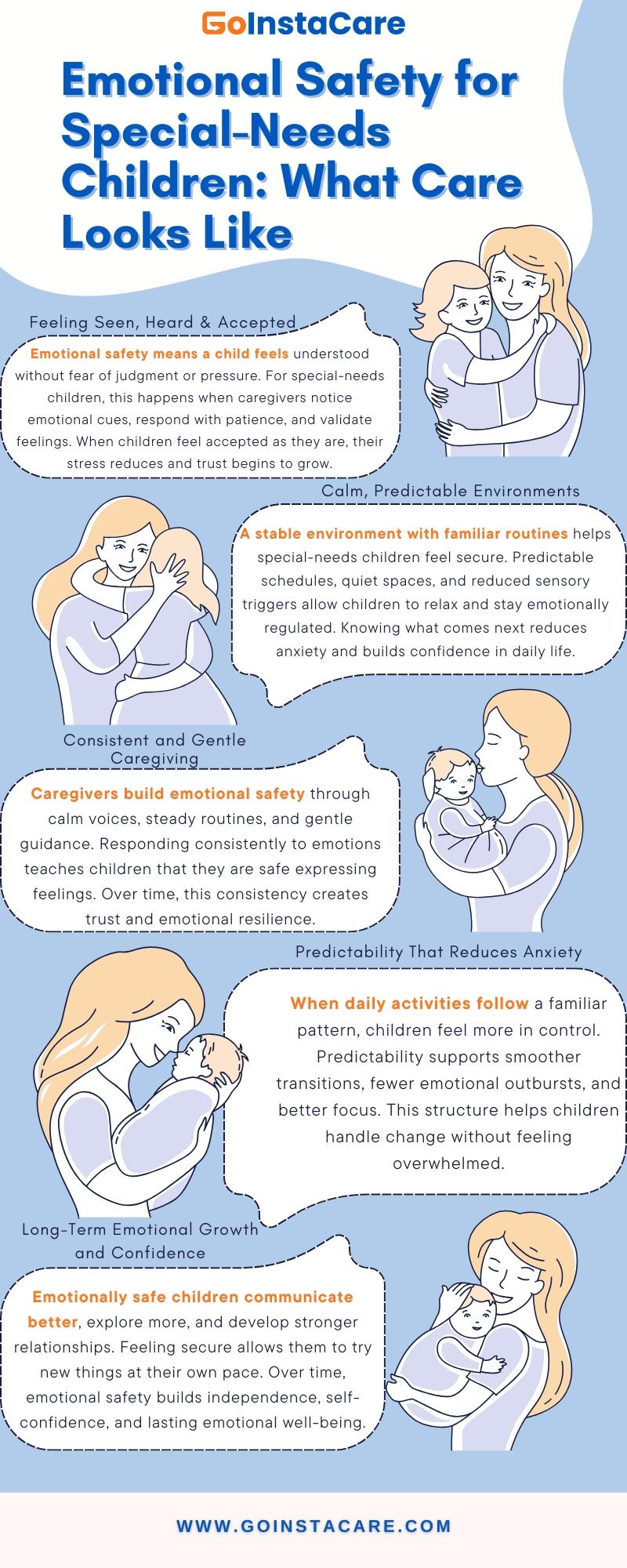
Emotional safety leads to long-term development that really helps a youngster flourish. One of the best things is that it makes it easier to talk to each other. When kids feel safe, they are more likely to tell you what they need because they know you will understand. This comfort helps them connect with others better, which makes them more confident when using words, gestures, or other ways to communicate.
Emotional safety also provides you more happiness. Children who feel protected are more likely to explore new things and make little choices. This method of learning helps children to learn essential life abilities without causing too much stress on them.
Stronger connections between caregivers and children will organically develop. A child learns that the person who takes care of them is always there for them and cares about how they feel. This trust establishes a strong connection that helps with learning and feeling protected every day. Children that are emotionally stable have a strong foundation that will help them accomplish well for a long time.
Emotional stability at GoInstaCare begins with caregivers who know what special needs kids need. Specialized caregivers use sensory-aware strategies, consistent routines, and calm communication to provide a secure, predictable environment for kids. They can notice emotional signs early and respond with reassurance because of their training. This minimizes stress. They help kids learn to control their emotions better by setting limits, respecting the child's pace, and making sure things are the same every day. Children who obtain this kind of care can feel more secure and confident in their daily lives. GoInstaCare's major goal is to connect families with caregivers that can help them to develop in every situation.
When a child is emotionally safe, they feel protected and cared. It reduces stress and helps them to handle everyday tasks with confidence.
Caregivers talk to kids in a calm way, follow routines, pay attention to their senses, and give them gentle advice. They respect limits, always respond the same way, and change the surroundings to make it less stressful, which helps the child feel comfortable and anchored.
Routines that are easy to predict lower stress, limit surprises, and make changes go more smoothly. Kids feel more in charge, know what's coming next, and stay emotionally stable all day.
Children talk more, explore with confidence, learn new things, and deal with their feelings better when they feel safe. Emotional safety is the basis for growth, independence, and healthy relationships.
A child feels safe when they act comfortable, make transitions smoothly, talk openly, make steady eye contact, and trust their caregiver. They ask for help calmly and interact with confidence.
People feel protected all the time when they have regular routines and good caregivers. Children with special needs succeed more well if they realize that their feelings are valuable. When children obtain compassionate care and communication that takes their skills into mind, they grow to feel relaxed in their everyday lives. This feeling of consistency makes children feel more sure of themselves as they learn and grow. It takes time to make an individual feel safe and it needs constant support that offers comfort and trust
Cities
Houston
Dallas
Austin
San Antonio
Miami
Chicago
Find Here