
December 31, 2025 • 6 min read

Table of Content
Some seniors find it harder to keep involved in daily life as they get older. People may not be able to do things they used to like because of changes in their bodies, less mobility, or health problems. Daily routines might become dull or lonely, and social groups often get smaller. These adjustments could have an effect on your confidence and emotional wellness.
It's also necessary to change your lifestyle and emotions. Living alone, retiring, or losing one's independence makes you feel less motivated and purposeful. Older people may pull away without saying how they feel. Gentle daily assistance helps people get past these problems by giving them structure, encouragement, and a meaningful connection. Seniors are more likely to stay interested, active, and emotionally secure in their daily lives when they feel like they have help instead of being rushed.
You can't just be busy to stay involved. Seniors call engagement the feeling of being emotionally involved, respected, and interested in everyday life. The first stage is to connect with other people. Having simple conversations, spending time together, and feeling heard might help seniors feel less alone and more supported emotionally.
Participation in daily activities is another important facet of engagement. Planning meals, helping with small tasks, or sticking to a daily routine are all examples of this. Older adults who take part in these activities feel that they have some control over their lives and that things are normal. Even a little bit of participation makes people more self-reliant and confident.
Life is worth living when you feel like you have a purpose and are participating. Seniors want to know that they are important and that they are still making a difference. Having hobbies, personal interests, or just being a part of family debates and decisions can all give you a sense of purpose. When seniors are cared for in person instead of over the phone, their motivation naturally goes up. When daily life respects dignity, encourages participation, and fosters emotional well-being without force, engagement rises.
Many seniors start stepping back when their confidence slowly decreases. Health problems in your body could cause daily tasks to feel more difficult that may lead to you looking at yourself. When seniors become uncertain of their abilities, they could stay away from things they used to enjoy.
Pain or problems with coordination can make it challenging for you to get around. To avoid pain, seniors may prefer to take breaks instead of doing things.
Hearing and speech problems might make it hard to interact with others, family visits may happen less frequently. Loneliness might slowly reduce your motivation.
A lot of senior citizens don't want to ask for help because they are afraid of offending other individuals. This emotional anxiety may cause people to stop participating even when help is readily available.
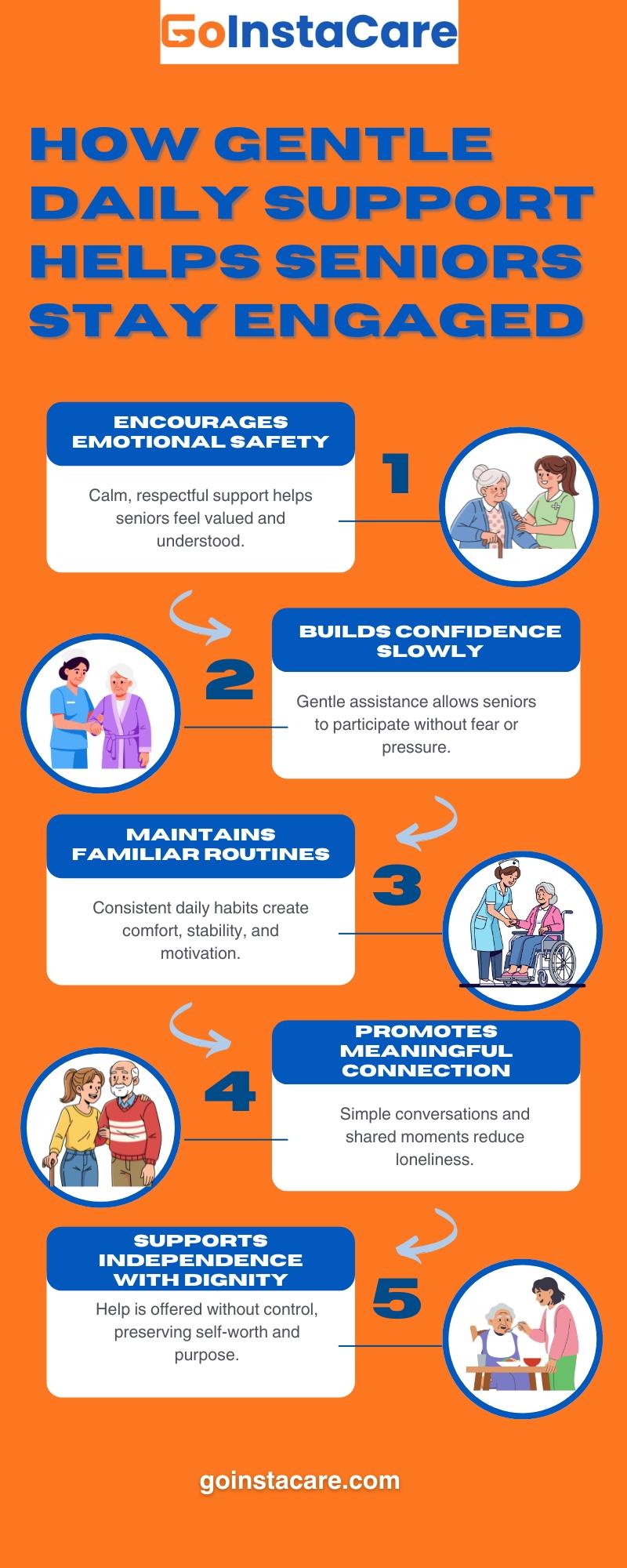
Seniors who receive gentle daily support can remain involved without feeling hurried or overburdened. They can engage at their own comfort level when they are encouraged without feeling compelled to do so. Seniors are more inclined to try to remain involved when they believe that the support they receive is polite.
Emotional reassurance has a small but important effect. Seniors feel acknowledged and valued when you listen to them. When you know an individual, your anxiety reduces and your emotional comfort decreases.
Seniors can stay engaged if they ask for help with everyday tasks like getting changed. These insignificant acts of kindness assist seniors stay emotionally encouraged in their daily lives.
Reliability helps seniors feel secure especially when their everyday lives start to feel insecure. Seniors who commit to a routine are less stressed because they know what to prepare.
Seniors are happier to get involved when they believe they have their things in order and their time is free. Simple things like regular meals give you a feeling of routine and safety.
When seniors finish tasks, it reminds them that they can be independent and peace. These interactions help you feel less isolated and more certain of yourself. Seniors can keep their emotions all the time and be connected and engaged.
Caregivers are incredibly important because they make seniors feel like they have significance and are valuable. People can make genuine connections with each other through interactions. Talking about memories could make seniors feel like an individual is paying attention to them and supporting them.
Gentle activities make individuals want to join in without causing too much stress on them. These group activities can help people feel like they have a purpose and get used to it again as long as they avoid straining themselves.
Seniors can need more time to say their thoughts and wish to convey or get used to fresh things. People feel emotionally safe when they get calm responses and constant support. Seniors feel less anxious and more likely to get involved when caregivers are engaged.
Kind support is good for more than just seniors. One of the most beneficial things about it is the way it calms you down. Families feel better knowing that their loved one is getting emotional support all the time.
Families are happier when they notice changes in behavior and interaction. When families know that a trustworthy caregiver, they may focus on their own tasks without stressing all the time.
Families find comfort in knowing that their loved one is being cared for and appreciated. Their interactions with family members develop more effectively when seniors feel safe and valued. People who care for seniors with care are more likely to be truthful.
When caregiving focuses on emotional connection, consistency, and respect, people are more likely to engage every day. GoInstaCare cares for seniors with kindness and makes sure that caregivers know each senior's routines, likes, and emotional needs. This personalized approach makes older people feel important and comfortable in their own space.
GoInstaCare caregivers encourage people to participate in daily life without putting pressure on them by offering gentle help instead of control. Emotional presence, calm conversation, and set rituals all help to create a sense of stability. This thoughtful way of caring for others helps the general public by helping seniors stay active, confident, and emotionally stable.
Seniors need to feel emotionally connected and have a sense of significance. This helps them stay confident and emotionally healthy every day.
Loss of interest might happen when you can't move around as much, feel lonely, have health problems, lack confidence, or are afraid of becoming dependent on someone else. These things can slowly weaken your motivation and emotional connection.
Gentle assistance respects comfort levels, gives encouragement, and lets elders choose what they want to do, so they can engage gladly without feeling rushed, judged, or overwhelmed by expectations.
Caregivers help seniors feel valued and emotionally linked to their daily lives by giving them emotional support and routine support.
Families may help seniors by encouraging them and allowing them to make choices. This helps them stay engaged without taking away their sense of power.
Seniors who don't need a lot of support every day are better able to stay in connection with life. When seniors obtain regular care, they are more likely to do things every day.
This plan helps people to keep their minds in check while simultaneously protecting their liberties. Families feel better when they know their loved one is safe when they get active support. Seniors may be emotionally healthy and get help with all parts of their daily lives.
Cities
Houston
Dallas
Austin
San Antonio
Miami
Chicago
Find Here