
December 26, 2025 • 7 min read
Table of Content
Many parents don't know how common school anxiety can be but it can go unrecognized. Some children think school is too much even when everything seems fine on their own. Parents may start to see little changes in how their child acts. These indications are simple to ignore. It is essential to remember that being anxious at school doesn't indicate you're vulnerable. Children can feel safe and supported in school if they have the right guidance and understanding.
School anxiety doesn't always show itself as obvious discomfort. It might happen in everyday situations. Some youngsters don't want to get dressed for school, say their stomach hurts, or stop talking. Some people might seem upset, angry, or tired after school. These reactions often show emotional stress instead of behavioural problems.
There are a lot of reasons that can make you nervous about school. Social demands and bringing to make changes all the time can be hard to deal around. Even positive changes like a classroom might make sensitive children feel unpleasant.
Some kids are naturally more sensitive to what is going on around them. They might feel very strongly, notice small differences, or have trouble with not knowing what to do. This sensitivity is not a flaw. It only means that students need to understand, have structure, and feel safe and comfortable at school.
Being away from their parents is one of the most common reasons why kids get anxious about school, especially younger kids. Even if a child likes to learn, it can be scary to be taken out of their comfort zone.
Unusual habits or unclear expectations can also cause stress. If schedules, rules, or the way the classroom is set up change, kids may not know what will happen next. This ambiguity often makes anxiety worse.
A lot of children feel a lot of stress from their friends. It might be hard on your emotions to make friends. Some children feel anxious about the way their friends will think that they will blend within. Children may have trouble with loud classrooms and constant activity.
Getting a new teacher might make anxiousness greater. Changes can make children feel less safe that takes time to get adjusted for.
School anxiety often shows up as subtle signs of worry instead of overt signs of worry. Morning resistance can show up in many ways, such as taking a long time to get ready, not wanting to get dressed, or having headaches or stomachaches all the time. These symptoms usually go away as the cause of stress is removed.
Emotional outbursts before or after school may also be signs. Some youngsters cry, become angry, or get frustrated when they feel safe at home to let out their stress. This isn't bad behaviour; it's just too much emotion.
There may also be withdrawal, irritation, or noticeable changes in behaviour. If a child suddenly becomes quiet, easily annoyed, or uninterested in things they used to enjoy, they may be having problems within. Parents can respond with empathy instead of force if they are aware of these changes, which will provide a way for comfort and support.
School anxiety can have a small but lasting effect on a child's confidence over time. When schoolwork gets too hard, kids may start to doubt their abilities or feel bad about themselves, even in topics where they usually feel good about themselves. Because of this lack of confidence, daily tasks may appear harder.
Another result is that people become more anxious about their routines. Instead of being routine, mornings, homework time, and transitions can become stressful. Kids may feel more stressed out during the day because they are worried about what will happen next.
It's also common to have problems focusing or getting used to everyday life. Anxious kids may have trouble relaxing, focusing, or having fun. If kids obtain emotional support, structure, and predictability, they may build stability and confidence at their own pace.
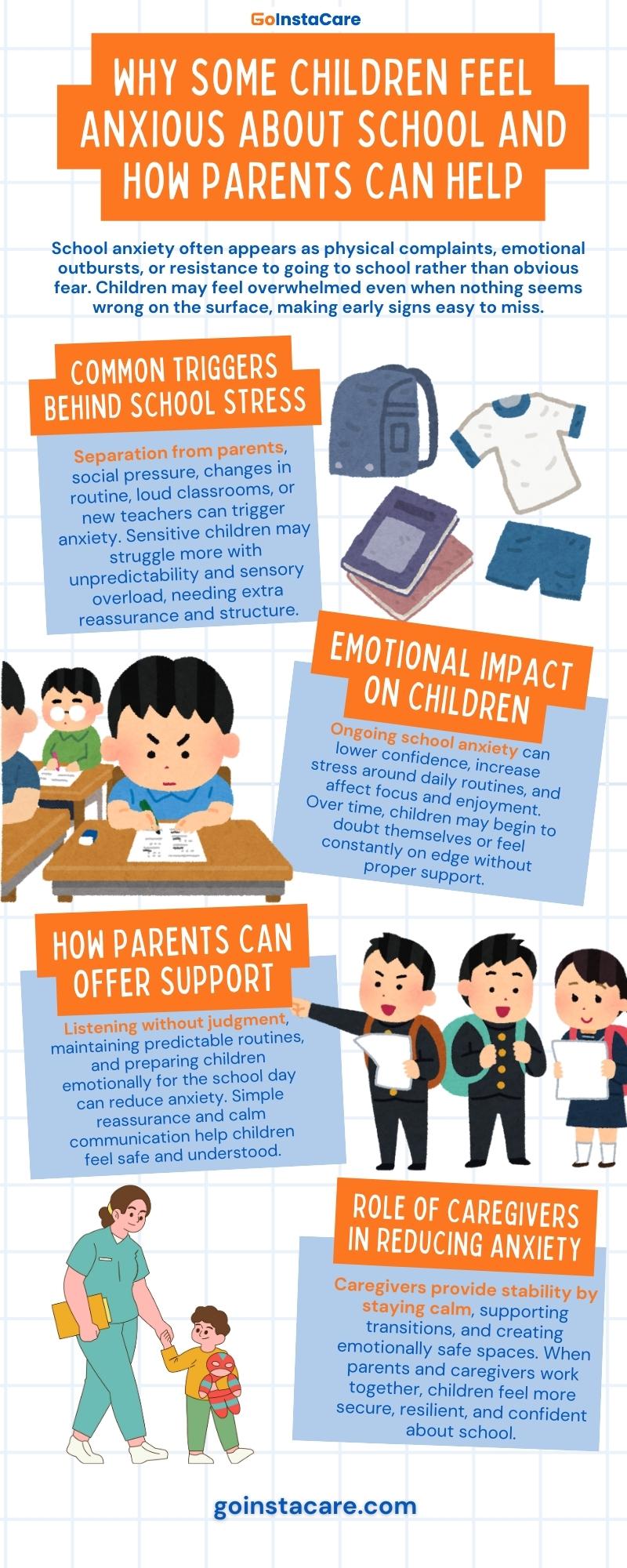
One of the best ways to care for a child is to listen to them and not dismiss their feelings. When kids feel heard and understood, their anxiety often goes away. When youngsters know how to communicate about their feelings, they don't feel the need to hide or downplay their concerns.
Having reliable morning and bedtime routines helps things stay stable. Kids feel less anxious and more in charge when they have a set bedtime and calm, relaxing mornings. Predictability makes people feel safer emotionally, especially when school is tough.
Getting youngsters ready for school emotionally could also help. Talking about what will happen during the day, who they will see, and what will happen after school could help them feel less scared of the unknown. Soft reminders of familiar routines can help people feel better.
When kids are told to talk about or play with their feelings, they may naturally deal with them. Storytelling, role-playing, or painting can help people express feelings that are hard to put into words. Parents may help their kids feel safe, confident, and supported by being patient and consistent.
Being a quiet and steady person can help children to feel stressed before school. Children feel more secure and less anxious when their caregivers are calm and kind.
It is very essential to help with changes before and after school. Planning without stress and having simple daily routines can all assist. Caregivers can provide children a place to relax or talk about how they feel. These emotional restores are healthy for children.
Resilience grows when emotional safety at home is enhanced. Caregivers may observe when an individual's mood swings and they should accept the way the individual appears.
Children do better in all situations when their parents and caregivers work together. This way of working together helps people to manage their feelings and get to know each other more effectively. Children are more confident gradually when they realize that people who care about them.
The aim of supportive caregiving at GoInstaCare is to make children feel understood rather than feeling alone. When children are scared, they want their parents to be calm and pay attention to them. When caregivers learn about a child's routines and emotional indications, the child feels more secure and comfortable. This knowledge reduces anxiety and increases trust over time.
Children who are having problems with anxiety about school are really essential. Children can start to feel better about themselves again if they get emotional support and schedules that are easy to follow. GoInstaCare focuses a lot on healthy relationships that help people to handle stress. This plan will help children feel supported and prepared to go to school with more trust and mental stability.
Children could be resistant in the morning, complain about their bodies, have emotional outbursts, withdraw, be irritable, or have changes in their sleep and eating that only happen on school days.
Some children are more sensitive to change, social pressure, sensory input, or not knowing what's going on, which can make school feel overwhelming even if they are well at school.
Parents can make their kids feel safer in the morning by making peaceful routines, getting them ready the night before, giving them comfort, and not rushing.
Yes, routines that children can reduce anxiety and boost confidence and help them comprehend what comes next.
If your child's anxiety makes it hard for them to do everyday tasks even after you have talked to them, you should think about looking for greater assistance.
You may help an individual with school anxiety by being kind and compassionate to them. People feel secure emotionally when they are consistent. Children might feel better about going to school if they have people who care about them. Anxiety doesn't tell children anything they can do. Children can grow at their own rate and become stronger with the right support and guidance.
Cities
Houston
Dallas
Austin
San Antonio
Miami
Chicago
Find Here