
October 27, 2025 • 6 min read

Table of Content
Many caregivers have a terrible time making ends meet on earnings that barely cover their basic needs, even while they spend their days helping others live with dignity. Families spend a lot on in-home care, often thinking most of the money goes to the provider. Much of it goes to business margins, administrative expenditures, and agency fees, leaving caregivers with very little. Because of this mismatch, both sides must deal with financial and mental stress. Families feel overwhelmed by costs, while caregivers feel unappreciated for their important work. The caring system has become unfair despite being built on compassion. This is because those who give the most care often get the least pay.
The system's fairness is subtly undermined by the network of intermediary layers that underlie each caregiving payment. Families frequently pay premium rates because they think the money will go into providing hands-on, empathetic care. However, conventional agencies and intermediaries collect substantial commissions—sometimes more than half of the overall cost. These costs do not cover the caregiver's salary; they cover marketing, administration, and profit. Consequently, families struggle to pay for assistance, and the one putting in the most effort frequently receives less than a living income. This disparity demonstrates how the caring sector has degenerated into a financially unproductive sector that puts structure before service, trapping compassion between budget cuts and expenses.
Caregivers often don't get paid enough because the system doesn't value their work or safeguard them well. Most home caregivers are women, and many of them are immigrants or people of colour. They don't have unions or benefits. People don't often consider caregiving a job, even though it requires skill, empathy, and physical strength. Because many of them work as contractors instead of employees, they can't get retirement plans, paid time off, or health insurance. When you add in cultural biases and the gender pay disparity, you get a workforce that is needed for family life but is seen as replaceable labour. It's not a sign of their worth; it's a lack of respect and recognition.
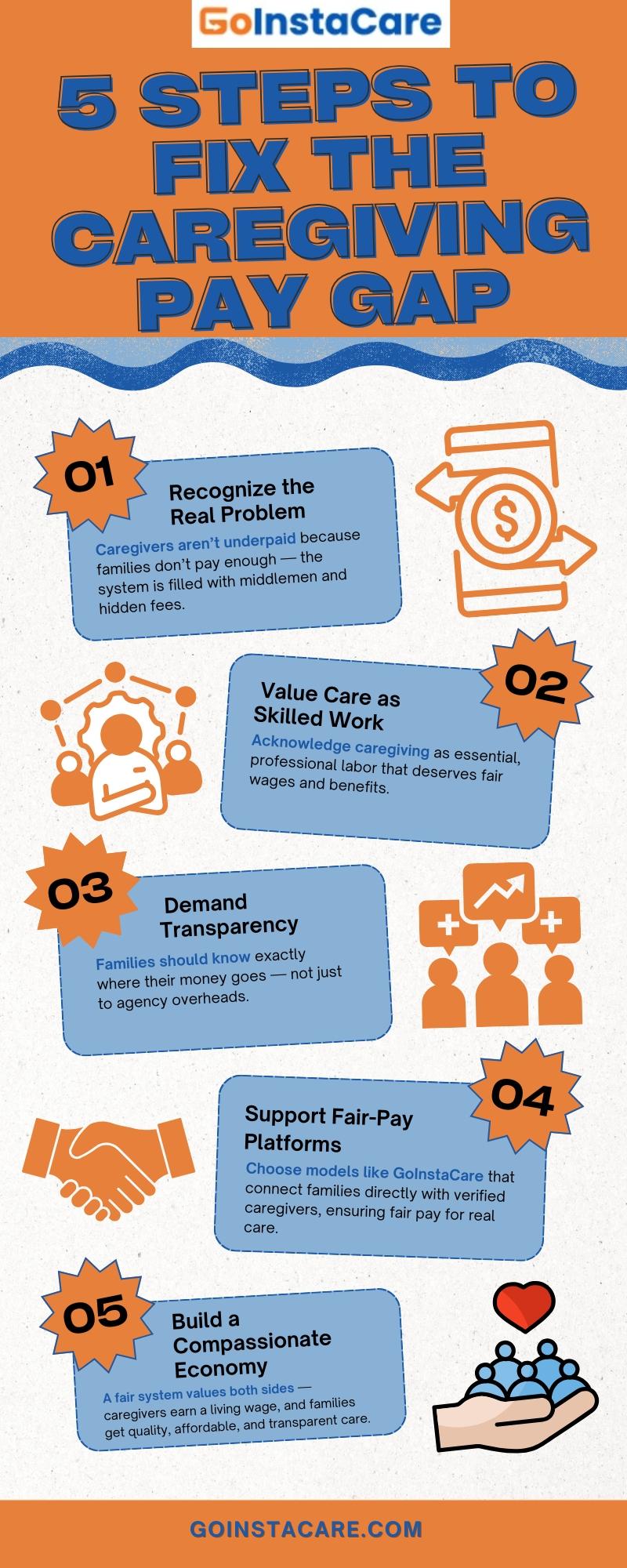
Not only does low pay for caregiving strain finances, but it also slowly lowers the morale of the people expected to provide comfort and support. Many caregivers work long, hard hours with numerous clients so they can pay for things like rent and groceries. Those who spend all day taking care of others but can't afford to take care of themselves become tired and frustrated. Stress has a big impact on the quality of care for seniors because it makes people hurry through their routines and leave their employment soon. Families have to deal with caregivers who change all the time that makes their loved ones feel less secure.
Talented caretakers are also less likely to stay in the field because they don't know how much money they'll make. Even if caring for others is more rewarding, many people leave to work in retail or hospitality, where they can make more money and get better benefits. No matter how dedicated an employee is, staying compassionate without fair pay is hard. In the end, the system fails elders who require loving, reliable care, families who pay more for less stability, and caregivers who feel like they don't matter. The first step in overcoming this problem is to see caregiving as both skilled and emotional work, not just a service that can be thrown away. Fair pay is not just a financial concern but also the foundation of compassionate care.
Families often wonder why the cost of senior care keeps going up when caregivers don't make much money. The truth is in the structure of the traditional care system. Agencies often act as a go-between for families and caregivers, charging placement and administrative fees that might be twice as much as the hourly rate.
Expenses increase up because there isn't enough of something and more people want it especially for specialized care like dementia. The cost of living in different parts of the country also affects the hourly rate. For example, cities with a higher cost of living usually have higher hourly rates. Families often don't know where their money is actually going or how to regulate it, which makes them angry and uncertain.
An honest care system is built on balance in which families only pay for the care they get and caregivers get the income they deserve. Agencies use of old technologies and high prices all make it hard to figure out how much care really costs. Families would be able to see exactly where their money is being spent and caregivers would be paid a fair for their efforts and expertise.
Taking care of an individual is an emotional and professional job that deserves respect and appropriate earnings. A mutually beneficial strategy built on trust and technical efficiency would allow for both compassion and accountability to exist at the same time. The goal is not to change caregiving but to bring back its humanity while keeping it affordable and useful for future generations.
GoInstaCare uses an idea focused on equality and accessibility to bring families and caregivers closer together. The AI-powered matching system quickly selects the best caregiver based on their experience and how well they get along with those who they care for. This makes the process quick and focused on the individual.
Families know exactly how much things will cost in advance. Caregivers get paid fairly according to the level of effort and skill. It is not just a platform. It is an organization where responsibility and kindness exist together. GoInstaCare's commitment changes how people care for others today. Everyone in the family and the caregiver can obtain support immediately.
Most of the money that families pay for care goes to agency fees and profits. This means that caregivers who do skilled tasks only get a small part of the money that families spend that means they are underpaid.
Most of the money that families pay for caring goes to agency commissions and profits instead of going directly to the caregivers. This means that families spend a lot and caregivers are not given enough money.
Caregivers may get compensated fairly through platforms like GoInstaCare. Clear payment methods and employment rules take into consideration their skills and emotional cost of providing care.
Families can get affordable care by using reliable platforms like GoInstaCare by hiring qualified caregivers and choosing services with kindness and equal pay for caregivers.
GoInstaCare encourages fair pay by directly pairing families with verified caregivers, cutting out middlemen, making prices explicit, and ensuring that caregivers are paid fairly for their skills, dedication, and emotional effort.
Care is more than just services. It begins with valuing those who give it. Families can ensure caregivers are appreciated, paid fairly, and given the power they need by supporting platforms that place fairness, compassion, and openness ahead of profit. Seniors benefit from regular, focused, and kind care, and proven and skilled caregivers do well when institutions recognize them. GoInstaCare is an example of this method. It creates a long-lasting environment where families and caregivers are appreciated and helped. Choosing transparent, ethical caregiving options protects the dignity of an important job and makes everyone feel better and more trusting.
Cities
Houston
Dallas
Austin
San Antonio
Miami
Chicago
Find Here