
December 18, 2025 • 6 min read
Table of Content
When families engage a caregiver, they have to deal with a lot of emotional stress. It affects the safety and comfort of loved ones and also their routines. Families often feel like they have to make a quick decision but they still want to be completely confident. This combination can make the process too much to handle and frustrating.
Families feel more secure and prepared when they know what to find. Recognizing early warning signs reduces the risk of getting care that is wrong. It helps families to make smart choices instead of depending on hope. Families can make care more secure and supportive by choosing caregivers who are respectful and emotionally stable.
Families shouldn't ignore the first hint of bad communication when they're trying to hire someone. When caregivers have trouble answering simple questions about availability, routines, or responsibilities, it could mean that they aren't committed or prepared. When routines and expectations are vital, good communication is especially important for safe and consistent care.
It is also possible that vague accounts of experiences will make people worry. Caregivers should be able to talk about their work history and how they usually deal with problems. Families have a hard time judging fitness and trust when answers are unclear. Strong caregivers answer with confidence and talk honestly. Taking care of this warning sign sets the stage for caring.
When giving care, it is really important to be patient and understanding. If a caregiver shows signs of being unhappy, such rushing their responses, showing visible frustration, or being impatient, early exchanges might show how they might act under pressure. In many cases of care, you need to be calm and emotionally intelligent.
When a caregiver ignores routines, feelings, or specific needs, it shows that they don't care. Care is more than just getting things done; it also means thinking about what each person requires. Kind caregivers pay close attention and respond pleasantly. If families don't have patience from the start, they could feel uptight and uncomfortable following the event. Families can choose caregivers who provide compassionate care by recognizing this warning sign early.
When a caregiver has trouble with organization, it might upset daily stability and emotional comfort. Observations that ignore the importance of preferences could be a hint of problems to come.
To keep children, seniors, and pets safe and comfortable, they need regular care. Reliable caregivers know that routines are helpful. They follow the rules of the house and ask for more information. When a caregiver doesn't pay attention to instructions at a young age, families face the possibility of having constant issues with trust.
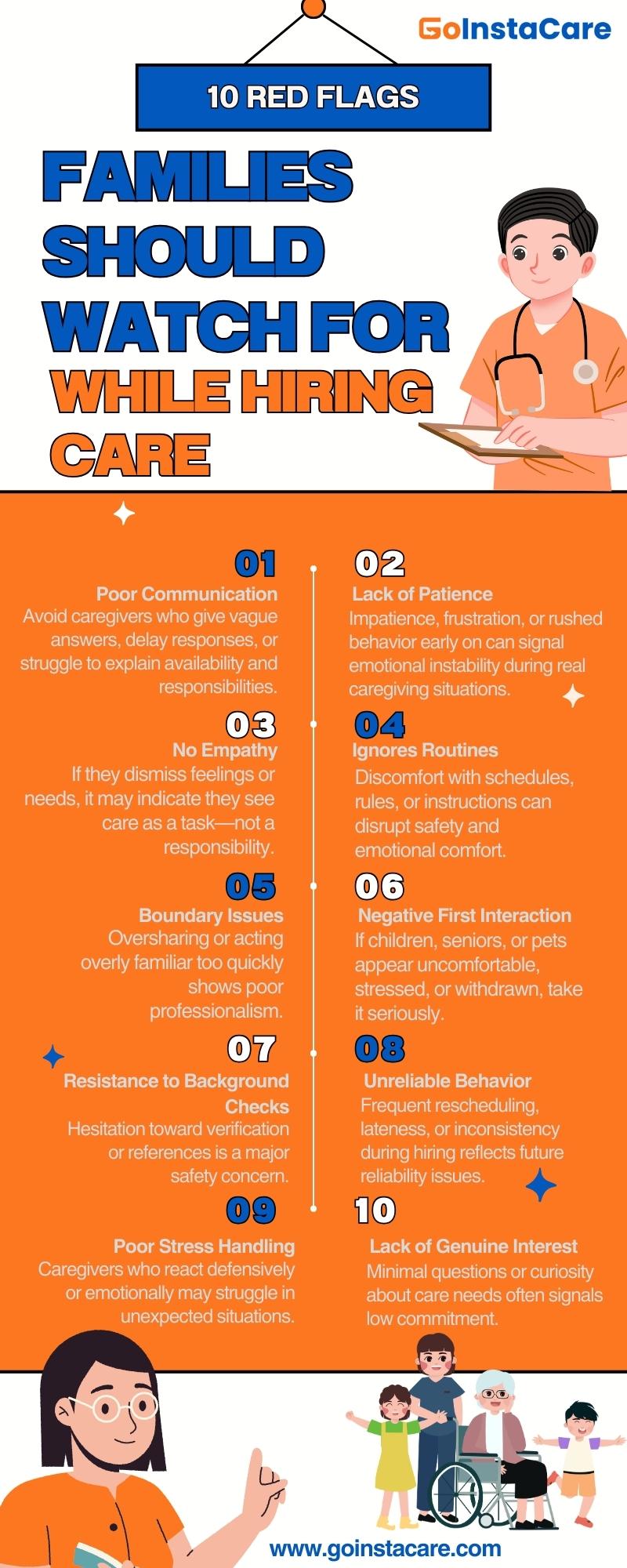
Families may feel uncertain when a caregiver gets to know them too quickly. Oversharing personal information or acting like trust has already been developed are all signs of bad professional judgment.
Being too familiar with an individual can sometimes make roles and expectations unclear. Another big problem is not caring about what the family desires. There are different cultures and levels of comfort in each home. When caregivers don't listen to these preferences, trust is broken. Care works best when it meets the requirements of the family. Professional caregivers always listen and respect people's personal space. They understand how important it is to talk to each other and keep things private.
The first interactions reveal how a caregiver and individuals they care for naturally bond. After quickly perceiving this, the individual receiving care may feel uncomfortable.
Ignoring feelings is another big red flag. Pets, children, and seniors all use body language and behaviors to show what they require. If a caregiver can't tell whether someone is stressed or uncomfortable, it could be hard for them to give them supportive care. Emotional intelligence is what makes you safe and trustworthy. When caregivers are kind, they respond in a way that is respectful and change their approach based on how the person appears. Families should take a time to think about if their early interactions seem unpleasant or rude.
There are a number of other warning signs that families should look out for during the hiring process. Early behavior often shows how someone would act in the future, and giving care requires being on time and being consistent.
Another big problem is that many don't want background checks or verification. Caregivers who don't like being open could be unreliable. Caregiving situations change every day and caregivers need to be calm. Stress might happen when caring for an individual when you're frustrated or when you're not willing to change your mind.
Caregivers should show interest in what the individual needs and how they feel emotionally. Not caring about an individual might lead to passive treatment. Families may choose caregivers who are trustworthy and safe by providing compassionate care.
Families can establish trust early on by being aware of early warning indicators. Families are spared worry and uncertainty in the future when issues are resolved during the employment process. Families can select caregivers who share their routines, values, and emotional expectations when they are aware of the situation early on.
The first step to building trust is to monitor. Families can decide how reliable and professional an individual is by seeing how they talk and how well they follow guidelines. These first impressions often correspond with the long-term course of treatment.
Emotional trust is just as important. Families are more secure when they know they made the right choice. This guarantee decreases stress and allows families to stop worrying about the safety of their loved ones all the time. Families may protect their emotional safety and build caring relationships based on respect and long-term stability.
You need to be honest to build strong caregiving relationships at GoInstaCare. When there are verified profiles and established standards, families feel better about the choices they choose. GoInstaCare helps families make safe choices by focusing on early warning signs. GoInstaCare puts safety and respect first in all of its services. This gives families peace of mind and caregivers an idea of what is expected of them. This strategy creates safe care environments where trust grows naturally.
Poor communication and avoidance of verification are all major red flags that could mean that care is not appropriate.
Families can examine how they communicate, how they react emotionally, how they respect routines, and how open they are to listening. Poor long-term compatibility is frequently indicated by early discomfort or recurring worries.
Establishing expectations, avoiding misconceptions, and fostering clarity are all achieved through consistent communication. It guarantees that caregivers are aware of routines, duties, and emotional requirements and assists families in evaluating dependability.
Families should be honest about safety regulations, routines, boundaries, and care objectives. In order to help caregivers grasp expectations and minimize confusion, clear instructions and open communication are essential.
A caregiver may not be a good fit for the position if they exhibit dismissiveness, impatience, disobedience, emotional detachment, tardiness, and lack of accountability.
Choosing to hire care is a very personal decision that requires trust and responsibility for the health and safety of loved ones. Families can protect their physical and mental safety by following rules about communication and respect for routines. Clear expectations and honest evaluation help to develop stronger caring bonds. Families feel less anxiety and stress when they trust their feelings. Being aware of issues can increase your self-esteem and help families to choose long-term and trustworthy caregivers.
Cities
Houston
Dallas
Austin
San Antonio
Miami
Chicago
Find Here