
December 31, 2025 • 7 min read

Table of Content
Trust is the most important emotional part of caring for children with special needs. When a child feels safe and understood, they are more likely to talk to, play with, and ask for help from others. If there is no trust, even gentle treatment can seem scary or too much to handle. So, the first and most important stage in every relationship, including caregiving, is to build trust.
Families often feel emotionally stressed throughout this adjustment. Parents could feel bad about bringing in a new individual, worry about how their child will feel, or be afraid of emotional failures. Getting a caretaker is both an emotional and a practical change. Kids are very aware of this transition, therefore families need to be gentle, calm, and patient to help trust grow naturally.
Trust can be hard for kids with special needs because they need things to be the same and familiar to feel safe. Even small changes can be painful and unexpected. A new caregiver may unintentionally throw off a child's sense of balance.
Being sensitive to change often makes your emotions stronger. Seeing or hearing new people, voices, or schedules can make you anxious or want to leave. Kids who receive information in different ways may find these shifts more stressful than helpful.
Children who have problems reading social cues or communication styles may feel unsafe when they meet new people. Inconsistent behavior in the past could make trust even weaker. Kids may not want to meet new people until they feel safe, which is a way of protecting themselves.
Children show trust through their actions instead of expressing. The way people act says more about how comfortable they are than what they say. A relaxed habit, a calm body, or a willingness to contribute might all be signs that trust is growing.
When there is no trust, kids may act out or have emotional reactions. This could show up as variations in how much food and sleep they get, as well as withdrawal, refusal to engage, or sudden outbursts. These actions are not acts of disobedience; they are emotional cues asking for safety and understanding.
Understanding developments is really essential. Even if a single response might not be enough to describe all, doing the same thing repeatedly in various situations reveals how a child really experiences. Families and caregivers should keep an eye on how a child acts throughout time. It is easier to find feelings when you monitor regularly. Adults may respond with patience if they are aware of these warning signs.
Children with exceptional disabilities benefit from consistency in an often uncertain world. Children feel less anxious and more emotionally at ease when daily activities follow a predictable pattern. Predictable schedules give people a sense of control that fosters trust.
Familiar voices and faces are also very important. Children learn to identify tone, emotions, and communication styles through repeated interactions with the same individuals. Fear eventually gives way to comfort as a result of this familiarity. When kids feel understood and don't have to explain themselves, trust builds.
You need to be patient and do this repeatedly. Children might have to go through the same steps multiple times before they feel secure. Even though progress may seem slow, each good connection makes emotional safety stronger. While consistent reliability allows children to grow up at their own pace.
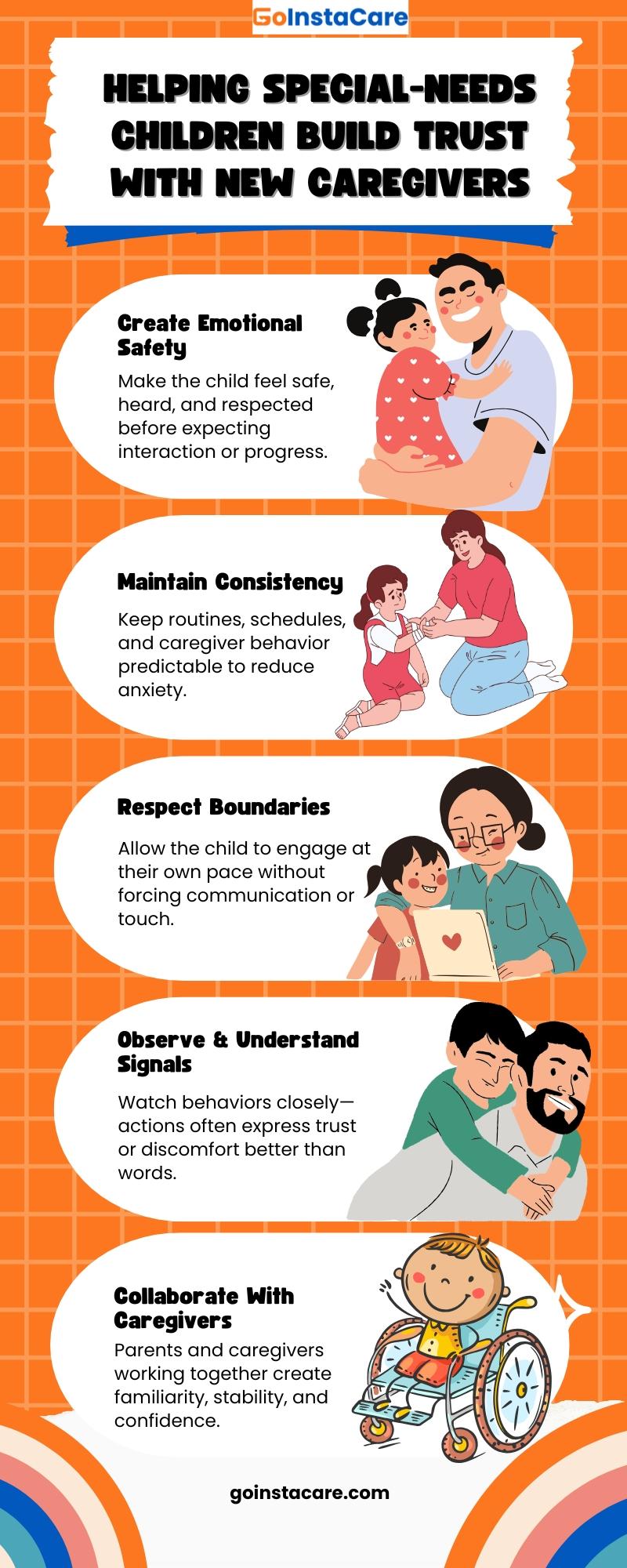
Respecting a child's boundaries is the first step to earning their trust. Children with disabilities need to know that their feelings and private space are significant. Being kind can help individuals to feel more comfortable but pushing them to talk to you could make them frightened.
It is just as essential to keep up with the child's rapidity. Some children may be able to participate immediately while others might require monitoring. Children feel more in control of their relationships and their surroundings when they are allowed to follow this natural pattern.
People feel safe emotionally when they are in secure relationships. You could feel less nervous if you talk carefully and keep to the same routines. Children feel they're safe when seniors always behave and talk the same way.
Parents are very important when it comes to making sure that children with special needs feel protected when their caregivers shift. If the child is ready ahead of time, their anxiety may go down. When kids are given simple explanations, visual cues, or social stories that help them understand what to expect, they are less scared of the unknown.
It's just as important to set up regular routines at home. Kids feel grounded when their routines stay the same, even when new people come into their lives. Children do better when things are the same because it helps them adjust without feeling overwhelmed and makes them more emotionally stable.
Both groups will trust each other greater when they can talk to each other truthfully. Care may feel more familiar and respectful when you tell the caregiver about the child's preferences and methods to feel safe. When their parents and caregivers agree, children feel like they are associated with a community. This collaboration creates an emotional environment where trust might steadily grow.
Children with disabilities should put emotional safety ahead of acquiring knowledge. If children don't trust you, they can feel uncomfortable and that could hold down their development. Children are more likely to learn and follow directions when they feel safe emotionally.
Children feel recognized and appreciated when they can trust you. If you encourage someone to reach a certain point without getting them prepared emotionally. When children feel safe enough to take risks, they actually grow.
To make an emotional place safe and constant care. When children obtain emotional support and peaceful responses, they feel protected. When you prioritize emotional safety first, you can go ahead easily and that is suitable for each child.
When caregivers have been properly selected to meet a child's emotional requirements, trust grows more quickly. Before choosing a caregiver, GoInstaCare wants to know everything about each child including their personality and routines. This delicate matching helps children become more connected.
GoInstaCare makes new interactions to feel comfortable by focusing on emotional connection. Caregivers are prepared to follow the child's schedule and maintain to their normal routines. This strategy makes people feel better emotionally and provides families with trust in the care they give to their children.
Trust makes kids with exceptional needs feel protected emotionally. When kids trust you, they are more likely to participate, accept help, and feel less anxious during daily activities and changes.
There is no set time frame. Some kids take days, while others require weeks or months. Trust builds over time via consistent behavior, patience, regular routines, and polite communication.
Signs include pulling away, not wanting to follow routines, having angry outbursts, not wanting to do things, changes in sleep, or more worry. These actions show that someone is uncomfortable, not that they are disobeying.
Caregivers should respect the child's boundaries, go at the child's pace, keep routines that are easy to follow, and be calm. Kids trust you more when they feel understood, not pushed.
Parents can get their child ready ahead of time, stick to routines, tell caregivers exactly what they want, and reassure them by talking to them in a calm, supportive way.
It takes time for children with special needs to gain trust. It develops gradually as a result of daily compassion, perseverance, and patience. Children feel more emotionally secure and understood when small, consistent behaviors are taken. Trust grows stronger and lasts longer when adults respect children's limits and move at their own pace.
Caregivers and their families share this duty. Children learn that new interactions can feel safe when they are approached thoughtfully and with emotional awareness. GoInstaCare facilitates this process by emphasizing emotional support and caregiving that prioritizes trust, enabling kids and families to proceed with assurance and confidence.
Cities
Houston
Dallas
Austin
San Antonio
Miami
Chicago
Find Here